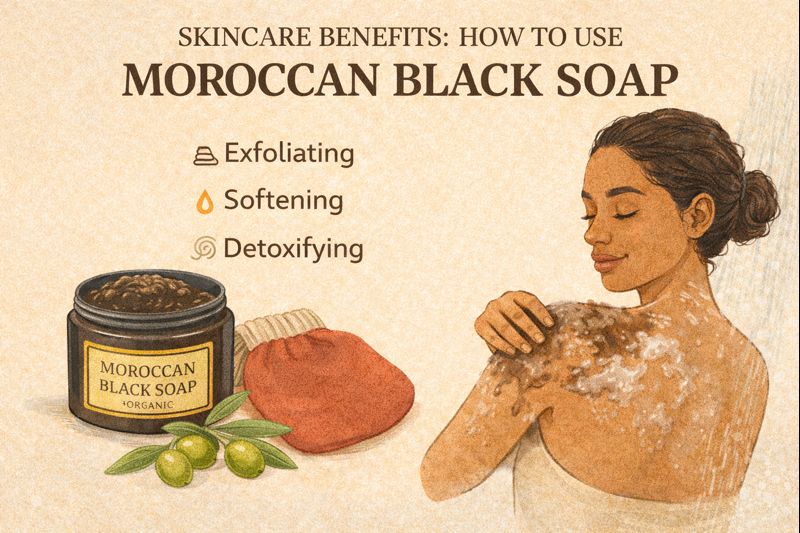
Moroccan Black Soap: A Traditional Skincare Ritual Rooted in Nature
“Beauty rituals that last centuries do so for a good reason.”
And Moroccan black soap is one of those timeless traditions that proves simple, natural care often works better than complicated routines.
Moroccan black soap is not a regular soap, and that’s the first thing to understand. Known as saboun beldi or sabon beldi, this traditional Moroccan black soap has been used for a very long time in Moroccan hammam rituals as a deep-cleansing and skin-renewing treatment. Unlike commercial soaps or the average drugstore soap bar, Moroccan black soap is a paste-like natural product made primarily from crushed black olives and olive oil, giving it its signature dark color and rich texture.
The foundation of this unique soap lies in its olive oil and olive paste base. Rich in fatty acids, antioxidants, and a very high content of vitamin E, olive oil plays a key role in nourishing the skin while cleansing it. The main function of vitamin E is to fight free radicals, which are responsible for premature aging, dullness, and uneven texture. This makes Moroccan black soap especially beneficial for improving overall skin health and slowing the aging process naturally.
One of the standout benefits of Moroccan black soap is its ability to prepare the skin for exfoliation. On its own, the soap does not scrub aggressively. Instead, it softens the dead skin cells, loosens dead cells, and opens the way for a deeper cleanse. This makes it an effective natural exfoliant when paired with the famous kessa glove, a rough-textured exfoliating mitt used in hammams. Together, they help remove dark particles, unclog open pores, and leave the skin incredibly smooth.
Because it is made from natural ingredients and free from harsh chemicals, Moroccan black soap is suitable for many skin types, including sensitive skin types, combination skin, dry skin, and even acne-prone skin. Unlike regular soap, which often strips the skin, black soap works with the skin’s natural balance. It cleanses deeply without removing essential natural oils, helping maintain hydration and comfort.
Another important distinction is texture and usage. Moroccan black soap has a soft, almost jelly-like consistency with little foam. This is intentional and a sign you’re using the real thing. Foam is not an indicator of effectiveness. The soap’s power comes from its ability to cleanse deeply while respecting the skin barrier. When used correctly, it leaves the skin feel clean, supple, and refreshed — not tight or dry.
💡 Practical tip:
Always look for authentic Moroccan black soap with a simple ingredient list based on olives and olive oil. Avoid versions loaded with artificial fragrances or fillers if you want maximum results.
Moroccan black soap isn’t just about cleansing — it’s a ritual rooted in traditional Moroccan beauty rituals, designed to support cell regeneration, smoother skin texture, and naturally radiant skin over time. Used on the entire body, it transforms shower time into a moment of care, not just hygiene.
In Part 2, we’ll break down exactly how to use Moroccan black soap, step by step — from warm water and hot shower prep to the right small amount, proper application on damp skin, and the role of the kessa glove for best results.
How to Use Moroccan Black Soap: Step-by-Step for Maximum Results
“Rituals work when technique meets patience.”
And Moroccan black soap is all about how you use it, not how much you use.
Using Moroccan black soap correctly is what makes all the difference between “nice cleanse” and wow, my skin feels brand new. This traditional moroccan ritual isn’t rushed, foamy, or aggressive like regular soap routines. It’s a slow, intentional process designed to soften the skin, lift dead skin cells, and deeply cleanse without irritation. If you want the best results, technique matters more than quantity.
Step 1: Start with Warm Water (Very Important)
Begin with a hot shower or bath using warm water. This step is essential because heat opens pores and softens the outer layer of the skin. Spend at least 5 minutes under warm water before applying the soap. This allows the black soap to penetrate properly and prepares the skin for deep cleansing. Applying black soap to cold or dry skin will significantly reduce its effectiveness.
Step 2: Apply a Small Amount on Damp Skin
Moroccan black soap is concentrated. You only need a small amount — about the size of a coin — for large areas of the body. Apply it to damp skin, not dripping wet. Spread the soap in thin layers over the entire body using your hands. Don’t expect foam; little foam is normal and a sign of an authentic Moroccan black soap, not a flaw.
Let the soap sit on your skin for 3 to 5 minutes. This pause allows the olive oil, natural oils, and fatty acids to soften the dead cells and dissolve impurities. During this time, the soap works like a pre-exfoliation mask rather than a cleanser.
Step 3: Exfoliate with a Kessa Glove
After letting the soap sit, rinse lightly with warm water, then exfoliate using a kessa glove. This glove has a rough texture designed specifically for Moroccan black soap rituals. Use circular motions, starting from the legs and moving upward toward the heart. Avoid scrubbing aggressively — pressure doesn’t equal results.
As you exfoliate, you’ll notice dark particles rolling off the skin. That’s a mix of loosened dead skin cells, excess oil, and impurities. This step improves skin texture, helps prevent ingrown hairs, unclogs hair follicles, and supports cell regeneration.
Step 4: Rinse and Rehydrate
Rinse thoroughly with warm water until all residue is gone. Your skin should feel incredibly clean but not tight. After exfoliation, apply a nourishing oil such as argan oil or a body moisturizer with shea butter to seal in hydration and protect the freshly cleansed skin.
💡 Practical tip:
Use Moroccan black soap once a week for sensitive or dry skin, and up to twice a week for combination skin or oily skin. Daily use is not recommended — this is a treatment, not a basic cleanser.
Why This Method Works
Moroccan black soap excels because it combines deep cleanse, gentle exfoliation, and nourishment in one ritual. Unlike commercial soaps loaded with harsh chemicals, it respects the skin barrier while still delivering visible improvement. With regular use, skin appears smoother, more even in skin tone, and naturally glowing.
Used properly, Moroccan black soap becomes a true holy grail product — not because it’s trendy, but because it works for a long time, across cultures, and across many skin types.
In Part 3, we’ll explore the skincare benefits in depth: how Moroccan black soap helps with dark spots, fine lines, free radicals, acne-prone skin, and overall radiant skin — and why it’s such an excellent choice in a modern skincare routine.
Skincare Benefits of Moroccan Black Soap: From Deep Cleansing to Radiant Skin
“Healthy skin doesn’t come from magic — it comes from consistency and care.”
And Moroccan black soap delivers both, naturally and effectively.
Moroccan black soap is often described as a beauty secret, but in reality, its reputation comes from very real, visible skincare benefits. When used correctly and regularly, this traditional moroccan cleanser supports long-term skin health rather than offering short-lived cosmetic effects. Its strength lies in how it works with the skin’s natural processes instead of forcing results through harsh chemicals.
One of the most noticeable benefits is deep cleansing. Thanks to its high olive oil content and olive paste base, Moroccan black soap penetrates beyond surface dirt. It softens buildup in pores, dissolves excess oil, and loosens impurities that regular soap often leaves behind. This deep cleanse helps reduce congestion, supports clearer pores, and improves the overall skin feel — especially for people with combination skin or acne-prone skin.
Another major benefit is exfoliation without abrasion. On its own, black soap does not scrub the skin. Instead, it prepares the skin by softening dead skin cells and loosening dead cells so they can be removed gently using a kessa glove. This method avoids micro-tears caused by harsh scrubs and supports smoother skin texture. Over time, this can visibly reduce dark spots, dullness, and uneven skin tone, revealing more radiant skin underneath.
Moroccan black soap also plays a powerful role in fighting premature aging. Rich in antioxidants and a very high content of vitamin E, it helps neutralize free radicals — unstable molecules caused by pollution, UV exposure, and environmental stress. These free radicals contribute to the formation of fine lines, rough texture, and loss of elasticity. By protecting the skin from oxidative stress, black soap supports a smoother, healthier-looking complexion and slows visible signs of aging.
Because it contains naturally occurring fatty acids and natural oils, Moroccan black soap nourishes while it cleanses. This makes it especially beneficial for dry skin, which often worsens with conventional cleansers. Instead of stripping moisture, black soap helps maintain hydration, keeping the skin soft and flexible. This balance is key to maintaining overall skin health and preventing irritation.
Its benefits extend beyond the face. Used on the entire body, Moroccan black soap helps prevent ingrown hairs, keeps hair follicles clear, and supports smoother skin after shaving or waxing. Many people also notice significant improvement in rough areas such as elbows, knees, and heels after regular use.
💡 Practical tip:
If your goal is smoother texture and fewer dark areas, consistency matters more than intensity. Use Moroccan black soap weekly and avoid over-exfoliation to allow the skin to regenerate naturally.
Another important advantage is tolerance. Thanks to its simple, natural ingredients, Moroccan black soap is often well tolerated by sensitive skin types when used correctly. Unlike commercial soaps, which may cause redness or tightness, black soap cleanses deeply while remaining respectful of the skin barrier.
Ultimately, the benefits of Moroccan black soap go far beyond cleansing. It supports cell regeneration, enhances skin clarity, improves tone, and helps the skin defend itself against daily stressors. That’s why it has remained a cornerstone of traditional Moroccan beauty rituals for generations — and why it continues to be an excellent choice in modern skincare routines.
In Part 4, we’ll wrap everything up with practical advice on choosing the real thing, avoiding fake versions, and understanding who Moroccan black soap is best suited for — plus tips for integrating it safely into your long-term routine.
How to Choose Authentic Moroccan Black Soap & Use It Safely Long-Term
“Quality is never an accident; it is always the result of intention.”
And this is especially true when choosing a traditional skincare product like Moroccan black soap.
As Moroccan black soap grows in popularity, so does the number of imitations on the market. Knowing how to identify the real thing is essential if you want to experience the true benefits of Moroccan black soap without irritating your skin. Authentic Moroccan black soap, also known as sabon beldi or black beldi soap, follows traditional recipes passed down through generations. At its core, it is made from an olive paste base, olive oil, water, and occasionally essential oils like eucalyptus or rose extracts — nothing more.
The texture is one of the easiest giveaways. Real Moroccan black soap has a thick, paste-like consistency, not a hard bar. Its black color ranges from deep brown to dark olive and may look slightly glossy. If the soap produces a lot of foam, smells strongly synthetic, or feels harsh on the skin, it’s likely not authentic. True black soap creates little foam and works through contact time, not bubbles.
Ingredients matter just as much. Avoid products filled with preservatives, artificial fragrances, or harsh chemicals. The power of Moroccan black soap lies in its natural ingredients, especially its high concentration of fatty acids, antioxidants, and a very high content of vitamin E. These components protect the skin from free radicals, support cell regeneration, and help maintain overall skin health.
When it comes to long-term use, moderation is key. Moroccan black soap is not meant to replace your regular soap for daily use. Think of it as a treatment rather than a cleanser. Most people benefit from using it once a week, while those with oilier or thicker skin may use it up to twice a week. Overuse can disrupt the skin barrier, even with a natural product.
💡 Practical tip:
If you have sensitive skin types or are using Moroccan black soap for the first time, start with a small amount and avoid aggressive exfoliation. Let the soap do the work.
Moroccan black soap is suitable for many skin concerns. It helps improve skin texture, reduce dark spots, prevent ingrown hairs, and promote a more even skin tone. For acne-prone skin, its antibacterial properties and ability to remove excess oil can be beneficial — but always follow with hydration to maintain balance. For dry skin, pairing the soap with argan oil or shea butter after exfoliation helps lock in moisture and restore comfort.
Another often-overlooked benefit is how Moroccan black soap supports aging skin. By removing buildup and encouraging renewal, it enhances product absorption and helps minimize the appearance of fine lines over time. This makes it a powerful complement to a minimalist skincare routine focused on prevention rather than correction.
Moroccan black soap also reflects a philosophy of care rooted in patience and ritual. In traditional Moroccan beauty rituals, cleansing is not rushed. The process — warm water, massage, exfoliation, and nourishment — is designed to respect the body and mind. This approach aligns perfectly with modern wellness ideals that prioritize intentional self-care over quick fixes.
Final Thought
Moroccan black soap is more than a unique soap — it’s a ritual, a treatment, and a return to simplicity. When chosen carefully and used correctly, it delivers deep cleansing, smoother texture, and visibly healthier skin. That’s a good reason it has remained a skincare holy grail for generations.
Mini-Survey: Your Moroccan Black Soap Ritual 🖤🧼
Moroccan black soap is a unique skincare experience, and everyone’s skin reacts differently. This quick survey helps highlight real routines, real results, and real preferences.
✨ Your answers help us create better skincare guides and share rituals that truly work. Sometimes, glowing skin starts with reconnecting to traditional care and choosing a natural product that’s been trusted for generations.