Water Type Personality: The Deep, Intuitive Nature of Water People
“Nothing is softer or more flexible than water, yet nothing can resist it.” — Lao Tzu
And this quote perfectly captures the essence of the water type personality.
In the world of personality types, the water element stands apart. Rooted in traditional Chinese medicine and ancient Chinese philosophy, the five elements theory (water, wood, fire, earth, metal) offers a powerful framework to understand human behavior, emotions, and even physical tendencies. Among these elemental personalities, water people are often the most misunderstood — quiet on the surface, but incredibly deep beneath.
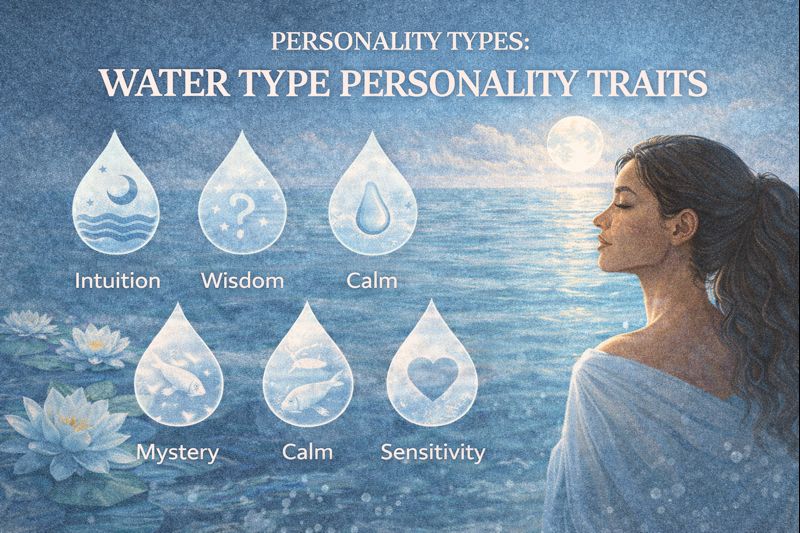
Water types are known for emotional depth, adaptability, and intuition. Just like water itself, they can be calm like a lake, powerful like a river, or mysterious like the deep ocean. Their personality is shaped by reflection rather than reaction. Unlike fire types, who act quickly and passionately, water personalities observe, absorb, and respond with intention. They rarely rush — they flow.
People with a dominant water element tend to be highly introspective. They spend a lot of time thinking, feeling, and processing the world internally. This gives them a strong emotional intelligence and a natural ability to understand others. Many water type people are excellent good listeners, often forming a small group of close friends rather than seeking constant social interaction. They value depth over quantity — in relationships, conversations, and experiences.
From a behavioral standpoint, water personalities often have a rich inner world. Creativity, imagination, and intuition come naturally to them. They may have great ideas but take a hard time expressing them unless they feel safe and understood. This doesn’t mean they lack confidence — rather, their strength lies in subtle influence rather than loud presence. In leadership or management positions, water people often lead quietly, guiding others through insight rather than authority.
In the five-element theory, water is closely connected to wisdom, memory, and adaptability. Water type people are usually flexible thinkers, able to see multiple perspectives and navigate complex emotional landscapes. This makes them particularly skilled in conflict resolution, counseling roles, creative fields, and any environment requiring empathy and strategic thinking. They tend to avoid unnecessary confrontation, preferring harmony and thoughtful communication.
On a physical and energetic level, traditional Chinese medicine associates the water element with the kidneys, bladder, and overall body energy reserves. When balanced, water energy supports resilience, calmness, and long-term vitality. When imbalanced, water personalities may struggle with fear, low self-esteem, or unstable emotions — especially during stressful periods or major life changes.
💡 Practical insight:
Water type people thrive when they protect their emotional boundaries. Regular solitude, journaling, meditation, or gentle practices like qi gong and mindfulness meditation help them recharge and maintain balance.
It’s also important to note that no one is only one element. Most people are a unique blend of multiple elemental influences. However, identifying your dominant water type personality can offer clarity about why you feel, think, and react the way you do — and how to better support your personal growth.
In Part 2, we’ll explore how water types interact with other elements — especially fire, earth, wood, and metal personalities — and how these dynamics shape relationships, work environments, and everyday social interaction 💧🔥🌱
Water Types & Other Elements: Compatibility, Contrast, and Balance
“Balance is not something you find, it’s something you create.”
And for water type personalities, balance often comes through relationships with other elements.
In the five elements system from traditional Chinese medicine, no personality type exists in isolation. Each element influences, supports, or challenges the others through a dynamic element cycle. Understanding how water types interact with fire, wood, earth, and metal personalities can offer powerful insights into relationships, teamwork, and personal development.
Water Types & Fire Types: Depth Meets Intensity
The interaction between water and fire is one of the most fascinating — and challenging. Fire types are expressive, energetic, and driven by passion. Fire people love action, visibility, and strong emotional expression. Water people, on the other hand, are reflective, intuitive, and inward-focused.
In relationships, fire personalities may initially see water types as distant or hard to read, while water personalities may feel overwhelmed by fire’s intensity. However, when balanced, this pairing can be incredibly powerful. Water cools roaring fire, bringing emotional regulation and depth. Fire energizes water, encouraging expression and confidence.
💡 Key insight:
Water types thrive with fire types when emotional boundaries are respected and communication stays honest but gentle.
Water Types & Earth Types: Stability and Safety
Earth element personalities are grounded, nurturing, and reliable. Earth people value routine, care, and emotional stability. For water personalities, earth types often feel safe — they provide structure and reassurance that water types may struggle to create for themselves.
This combination works well in friendships, family relationships, and long-term partnerships. Earth absorbs water, helping water people feel held rather than overwhelmed by their own emotional depth. However, imbalance can occur if earth personalities become overly controlling or if water types retreat too deeply into their inner world.
Water Types & Wood Types: Growth and Vision
Wood types represent growth, creativity, and forward momentum. They are idea-driven, ambitious, and future-oriented. Water nourishes wood, making this relationship naturally supportive. Water personalities often inspire wood types emotionally, while wood types encourage water people to act on their great ideas instead of keeping them internal.
This dynamic is common in creative collaborations, startups, and personal growth journeys. The risk lies in pace: wood types may push too fast, while water types need time to process.
Water Types & Metal Types: Structure Meets Sensitivity
Metal element personalities value order, clarity, and precision. They tend to be analytical, disciplined, and structured. For water personalities, metal can feel either grounding or restrictive. Metal supports water by providing boundaries and direction, but too much structure can suppress water’s emotional flow.
When balanced, metal helps water types organize their thoughts, express ideas clearly, and turn intuition into action. Water, in return, softens metal’s rigidity with empathy and emotional awareness.
Why These Interactions Matter
Understanding elemental dynamics helps explain why certain people feel instantly comfortable — and why others feel challenging. Water type people are especially sensitive to emotional environments, making compatibility and energetic balance crucial for their well-being.
💡 Practical tip:
If you’re a water personality, notice which people energize you and which drain you. That’s often your dominant element reacting to theirs.
In Part 3, we’ll dive deeper into water type personality traits themselves — including emotional depth, creativity, body tendencies, health patterns, and how water energy shows up in daily life 💧
Inside the Water Type Personality: Emotional Depth, Body Signals & Daily Life
“Still waters run deep.”
And no saying describes water type people better than this one.
Among all elemental personality types, the water type personality is the most inward-focused. While fire personalities express outwardly and wood types push forward, water types move inward and downward — into feeling, memory, intuition, and reflection. This gives them extraordinary emotional depth, but it also means they experience the world more intensely than most people realize.
Emotional & Psychological Traits of Water Types
At their best, water personalities are deeply intuitive, emotionally intelligent, and perceptive. They sense moods, shifts, and unspoken dynamics almost instantly. This makes them excellent good listeners, confidants, therapists, writers, strategists, and creatives. They often understand others before understanding themselves.
However, this sensitivity can also be a challenge. Water type people may struggle with unstable emotions, fear of uncertainty, or low self-esteem when they don’t feel safe or supported. They may need more time than other types to make decisions, not because they’re indecisive, but because they process information on multiple emotional levels.
Socially, water types prefer depth over breadth. They often thrive within a small group of close friends rather than large social circles. Big crowds and constant stimulation can feel draining. Spending time alone isn’t loneliness for water people — it’s survival.
Physical Traits & Body Connections
In traditional Chinese medicine, each element corresponds to specific body organs. The water element is linked to the kidneys and bladder and governs the body’s stored energy — often called kidney energy. This energy influences stamina, resilience, and long-term vitality.
When water energy is balanced, people feel grounded, calm, and quietly strong. When depleted, water types may experience fatigue, anxiety, fear-based thinking, or physical issues such as lower back pain, urinary tract infections, or sensitivity to cold — especially during the winter months, which is the season of the water element.
Water types may also have a softer body structure, sometimes with a smaller frame or rounded features, reflecting the fluid nature of their dominant element. These are tendencies, not rules — but they often align surprisingly well.
Strengths of Water Type People
- Deep intuition and emotional intelligence
- Strong imagination and creative potential
- Natural ability to reflect, analyze, and understand complexity
- Excellent at conflict resolution
- Quiet leadership and strategic thinking
Many water personalities become great leaders not through dominance, but through insight. They see patterns others miss and often succeed in roles requiring patience, vision, and empathy.
Challenges to Watch For
- Overthinking and emotional overload
- Difficulty expressing needs
- Fear of change or uncertainty
- Retreating too deeply into their comfort zone
💡 Practical insight:
Water types need regular emotional “drainage.” Journaling, creative expression, long walks near water, or mindfulness meditation help prevent emotional stagnation.
Lifestyle & Self-Care for Water Types
Water personalities thrive when their routines respect their nervous system. Gentle practices like qi gong, yoga, swimming, and slow breathing help regulate water energy. Diet-wise, warm foods, soups, and mineral-rich ingredients support kidney energy, especially in cold weather.
Most importantly, water types must honor rest. Unlike fire or metal personalities, pushing through exhaustion backfires. Recovery is not optional — it’s essential.
In Part 4, we’ll explore how water type people can grow, stay balanced, and unlock their full potential — including career paths, relationships, and practical tips for turning emotional depth into personal power 💧✨
Living as a Water Type: Growth, Balance & Personal Power
“The river does not struggle — it flows.”
And this is the greatest lesson for every water type personality.
Understanding that you are a water type isn’t about labeling yourself — it’s about learning how to work with your nature instead of against it. Among all elemental personality types, water people have the deepest inner world. When that depth is honored, water types become intuitive, wise, resilient, and quietly powerful. When ignored, it can turn into fear, exhaustion, or emotional overwhelm.
Personal Growth for Water Types
For water people, growth rarely comes from forcing change. It comes from safety, trust, and gradual expansion. Unlike fire types, who thrive on momentum, or metal personalities, who grow through discipline, water types grow through emotional clarity.
One of the biggest growth challenges for water personalities is fear — fear of the unknown, fear of failure, fear of being seen. In the five-element theory, fear is the core emotion of the water element. When balanced, fear becomes wisdom and caution. When excessive, it becomes paralysis.
💡 Growth tip:
Water types grow best when they take small, intentional steps outside their comfort zone — not dramatic leaps.
Careers & Purpose for Water Type People
Because of their emotional intelligence, water types excel in fields that require perception, patience, and understanding. They often thrive in:
- Psychology, therapy, coaching
- Writing, art, music, design
- Strategy, research, analysis
- Teaching, mentoring, healing professions
- Quiet leadership or advisory roles
Water people may struggle in highly aggressive environments or roles that demand constant visibility. However, when supported, they often become the unseen backbone of teams — the ones with the insight everyone relies on.
Relationships & Emotional Boundaries
In relationships, water personalities love deeply — sometimes too deeply. They may absorb emotions that aren’t theirs and feel responsible for others’ feelings. Learning emotional boundaries is essential.
Healthy relationships for water types feel calm, safe, and emotionally honest. They do best with partners or friends who respect their need for solitude and don’t interpret it as distance.
💡 Relationship insight:
Needing alone time is not rejection — for water types, it’s regulation.
Health & Energy Balance
In traditional Chinese medicine, the water element stores life energy. When water energy is depleted, everything feels harder. Sleep becomes shallow, motivation drops, and anxiety rises.
Water types must protect:
- Rest and sleep
- Warmth (they are often sensitive to cold)
- Emotional stability
- Kidney and lower back health
Practices like qi gong, gentle martial arts, swimming, and mindfulness meditation are especially beneficial. Diet-wise, warm foods, broths, and mineral-rich ingredients support long-term balance. Excessive caffeine, cold foods, and chronic stress weaken water energy.
Becoming the Best Version of a Water Type
A balanced water personality is calm but strong, flexible but grounded. They don’t need to become louder, faster, or harder to succeed. Their power lies in insight, timing, and depth.
When water types trust their intuition, respect their rhythm, and stop comparing themselves to other types, they unlock a unique kind of leadership — one based on wisdom, not force.
Final Thought
Water does not compete with fire, metal, wood, or earth. It complements them. The same is true for water type people. Your depth is not a weakness — it’s your greatest asset.
Learn to flow, not to fight. And you’ll find that the world often moves with you 💧✨
Mini-Survey: Are You a Water Type Personality? 💧
Everyone expresses the five elements differently. This short survey helps you reflect on your dominant element, your emotional patterns, and how you interact with the world.
✨ Your answers can reveal whether the water element is dominant in your personality, or how it blends with fire, earth, wood, or metal. Understanding your elemental nature isn’t about labels — it’s about self-awareness, balance, and personal growth.