Why Coconut Oil Soap Is a Golden Standard for Healthy, Radiant Skin
“Nature gives us everything we need — we just need to use it wisely.”
And when it comes to gentle cleansing and glowing skin, coconut oil has earned its place as a true classic.
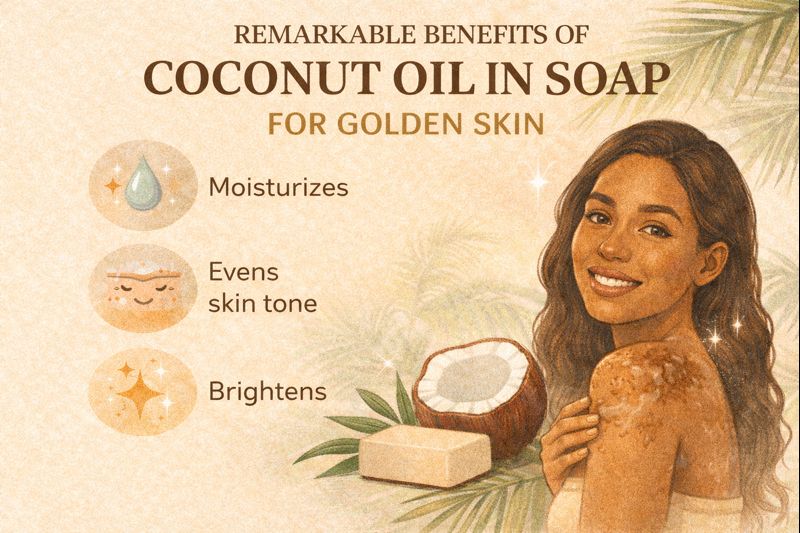
Coconut oil soap has become a popular choice in natural skincare — and not just because it smells amazing. Derived from Cocos nucifera, coconut oil brings together cleansing power, nourishing properties, and skin-loving fatty acids that make it especially effective in soap form. When formulated correctly, coconut oil-based soaps deliver a balance of deep cleansing, comfort, and glow — often referred to as “golden skin”: skin that looks healthy, smooth, and naturally radiant rather than dry or over-processed.
One of the main reasons coconut oil works so well in soap is its unique fatty acid profile. It contains a high content of lauric acid, along with caprylic acid, capric acid, and myristic acid. These natural fatty acids give coconut oil its powerful cleansing and antimicrobial properties. In the soap-making process, these acids react with lye in a controlled chemical reaction, forming soap molecules that effectively bind to dirt and excess oil on the skin’s surface. This makes coconut oil soap an effective cleanser without the need for harsh detergents.
Another standout feature is lather. Coconut oil is famous for producing a rich lather, even in hard water. Whether it’s a creamy lather, bubbly lather, or luxurious foam, coconut oil-based soaps elevate the entire cleansing experience. This abundant lather helps evenly distribute the soap across the skin, improving cleansing efficiency while enhancing the overall bathing experience. For many people, this luxurious feel is what sets coconut oil soap apart from regular soaps or commercial soaps.
Despite its strong cleansing ability, coconut oil soap can still be suitable for many skin types, including sensitive skin, when properly balanced with other oils like olive oil or shea butter. High-quality handmade soaps, especially those produced in small batches, often combine coconut oil with moisturizing ingredients to prevent stripping the skin of its natural oils. This is what makes coconut oil soap an excellent choice rather than an overly drying one.
Coconut oil also contributes to skin nourishment. Naturally rich in vitamin E, it helps protect the skin against free radicals, which are responsible for dullness, premature aging, and the appearance of fine lines. Over time, regular use of coconut oil soap can support improved skin elasticity, smoother texture, and a more radiant complexion — especially when paired with a consistent daily skincare routine.
💡 Practical tip:
If you have dry skin or very sensitive skin, choose a coconut oil soap that blends coconut oil with other natural ingredients. Pure 100% coconut oil soaps cleanse deeply but may feel too strong for daily use unless balanced.
Beyond cleansing, coconut oil soap aligns with a more conscious approach to skin care. It’s often made from a renewable resource, avoids harsh chemicals, and fits well into minimalist routines focused on long-term skin health rather than quick cosmetic fixes. This makes coconut oil soap a smart step toward cleaner beauty and healthier habits.
In short, coconut oil in soap isn’t a trend — it’s a time-tested ingredient with numerous benefits. From cleansing and lather to nourishment and glow, it lays the foundation for golden, healthy-looking skin.
Coconut Oil Soap for Sensitive Skin and Different Skin Types
“Good skincare adapts to your skin — not the other way around.”
And that’s exactly why coconut oil soap works so well across so many skin profiles.
One of the most impressive aspects of coconut oil soap is its versatility. While coconut oil is known for its strong cleansing ability, when used correctly in soap, it can suit a wide range of skin types — including sensitive skin, which often reacts badly to commercial soaps and harsh chemicals. The key lies in formulation, balance, and how the soap is made.
Let’s start with sensitive skin. People with sensitive skin often experience tightness, redness, or irritation after washing, especially with regular soaps that contain harsh detergents, artificial fragrances, or preservatives. Coconut oil-based soaps, especially those made with natural ingredients and minimal additives, tend to be better tolerated. Thanks to coconut oil’s anti-inflammatory properties and soothing properties, these soaps can cleanse without triggering discomfort — provided they are not overly concentrated.
For dry skin, coconut oil soap can be both helpful and tricky. Coconut oil is an excellent cleansing agent, but in high amounts, it can feel too stripping. That’s why high-quality handmade soaps often blend organic coconut oil with moisturizing oils like olive oil or shea butter. This combination ensures the soap removes impurities while still protecting the skin barrier. When balanced properly, coconut oil soap helps remove dead skin cells, improve texture, and support a smoother, more hydrated appearance over time.
Those with oily skin or acne-prone skin may benefit greatly from coconut oil soap’s antimicrobial and antibacterial properties. The fatty acids — particularly lauric, caprylic acid, and capric acid — help combat bacteria and fungi that can contribute to breakouts or skin conditions. Used regularly but not excessively, coconut oil soap can help regulate excess oil, keep pores clean, and reduce congestion without over-drying.
For combination skin, coconut oil soap often strikes the perfect balance. It cleanses oily areas thoroughly while remaining gentle enough for drier zones. This makes it a popular choice for people who struggle to find a single cleanser that works everywhere. Many natural bar soap formulas are designed specifically for this balance, making coconut oil a key ingredient in versatile cleansing bars.
💡 Practical tip:
If you’re unsure how your skin will react, start by using coconut oil soap once a day or every other day. Pay attention to how your skin feels after one week before increasing frequency.
Another reason coconut oil soap works across diverse skin needs is its compatibility with modern soap-making techniques. Cold process soap preserves the beneficial properties of coconut oil while maintaining naturally occurring glycerin, which helps attract moisture to the skin’s surface. This is especially beneficial for people prone to dryness or irritation.
It’s also worth noting that not all coconut oil soaps are created equal. Some commercial soaps labeled “coconut” contain very little actual coconut oil and rely heavily on synthetic surfactants. True coconut oil-based soaps — especially homemade coconut oil soaps or those produced in small batches — deliver the real benefits of coconut oil without unnecessary fillers.
In daily life, coconut oil soap fits seamlessly into a daily skincare routine. It works well as a body cleanser, hand soap, and even as a facial cleanser for those whose skin tolerates it well. With regular use, many people notice smoother texture, fewer clogged pores, and a more balanced skin feel.
In Part 3, we’ll explore the science behind coconut oil soap: its fatty acids, antioxidant action against free radicals, and how it supports skin elasticity, glow, and long-term skin health — the real secret behind that “golden skin” effect.
The Science Behind Coconut Oil Soap: Why It Creates Golden, Healthy Skin
“Great skincare starts when science and nature work together.”
And coconut oil soap is one of the best examples of that balance.
What truly sets coconut oil soap apart isn’t just how it feels on the skin, but what’s happening on a deeper level every time you use it. Coconut oil contains a unique combination of fatty acids, antioxidants, and protective properties that make it especially effective in soaps. These elements work together to cleanse, protect, and improve the skin’s appearance over time — creating that healthy, “golden” glow people love.
One of the most important components is its fatty acid profile. Coconut oil is naturally rich in lauric acid, along with caprylic acid, capric acid, palmitic acid, and myristic acid. These fatty acids are responsible for coconut oil’s strong cleansing and antimicrobial properties. During the soap-making process, these acids undergo a controlled chemical reaction with lye, forming soap molecules that attract dirt, excess oil, and impurities from the skin’s surface. This allows the soap to rinse clean without leaving residue.
Beyond cleansing, these fatty acids also help maintain balance. Lauric acid, in particular, has well-documented antibacterial and antifungal properties, which can be beneficial for people dealing with acne-prone skin, clogged pores, or certain skin conditions. Caprylic and capric acids further support this action by helping control microbial growth, making coconut oil soap an effective yet natural cleanser.
Another key benefit comes from antioxidants, especially vitamin E. Coconut oil contains natural vitamin E, which helps protect the skin from free radicals caused by pollution, UV exposure, and environmental stress. Free radicals break down collagen and contribute to dullness, uneven texture, and the appearance of fine lines. By neutralizing these unstable molecules, coconut oil soap supports improved skin elasticity, smoother texture, and a more radiant complexion over time.
Coconut oil soap also plays a role in gentle exfoliation. While it’s not a scrub, its cleansing action helps loosen surface buildup and remove dead skin cells during washing. This promotes a fresher appearance, brighter tone, and improved absorption of moisturizers afterward. Over time, this contributes to smoother, healthier-looking skin without irritation.
💡 Practical tip:
If your goal is glow and smoothness, follow coconut oil soap with a lightweight moisturizer or oil while the skin is still slightly damp. This helps lock in hydration and enhance radiance.
Another reason coconut oil soap supports golden skin is its effect on hydration balance. When formulated correctly — especially in handmade soaps or cold process soap — it retains naturally occurring glycerin. Glycerin draws moisture to the skin, preventing dryness and helping the skin feel supple after cleansing. This is a major advantage over commercial soaps that strip moisture and leave the skin tight.
Coconut oil soap also fits well into a broader skin care philosophy that values simplicity. Free from harsh chemicals and heavy synthetic additives, it supports the skin’s natural rhythm instead of overwhelming it. With regular use, many people notice fewer dry areas, a smoother texture, and an overall healthier skin appearance.
Finally, coconut oil soap contributes to long-term skin resilience. By supporting the barrier function, reducing oxidative stress, and cleansing effectively without over-drying, it helps the skin better handle daily exposure to stressors. This is what gives skin that naturally glowing, well-cared-for look — not shiny, not greasy, just balanced.
In Part 4, we’ll bring everything together: how to choose high-quality coconut oil soaps, how often to use them, potential precautions, and how to integrate them into your routine for maximum benefits and long-term skin health.
How to Choose and Use Coconut Oil Soap for Maximum Benefits
“Consistency beats intensity every time.”
And when it comes to coconut oil soap, how you choose and use it matters just as much as the ingredient itself.
Not all coconut oil soaps deliver the same results. To truly experience the remarkable benefits of coconut oil for golden, healthy-looking skin, quality and formulation are key. Many commercial soaps use coconut oil mainly for marketing appeal while relying heavily on harsh chemicals, harsh detergents, or synthetic surfactants to do the actual cleansing. These formulas may lather a lot, but they often strip the skin of its natural oils, leaving it dry, tight, and irritated over time.
A high-quality coconut oil soap should clearly list organic coconut oil or Cocos nucifera oil as a key ingredient. The best options are handmade soaps, often produced in small batches, using the cold process soap method. This process preserves the natural properties of the oil, maintains glycerin created during the chemical reaction, and avoids overheating ingredients — all of which help protect the skin barrier.
When choosing a coconut oil soap, balance matters. Pure 100% coconut oil soaps produce an incredible rich lather, bubbly lather, and luxurious foam, but they can be too strong for daily use, especially for dry skin or sensitive skin. The most effective formulas combine coconut oil with other nourishing oils like olive oil or shea butter. This creates a creamy lather that cleanses deeply while remaining gentle and comfortable.
How often you use coconut oil soap also impacts results. For most skin types, once daily use on the body is ideal. For the face, people with acne-prone skin or oily skin may tolerate daily use, while those with sensitive or dry skin should start every other day. With regular use, coconut oil soap helps maintain clarity, smoothness, and a healthy glow without overwhelming the skin.
💡 Practical tip:
If your skin ever feels tight after washing, reduce frequency or switch to a more balanced coconut oil soap blend. Golden skin comes from balance, not over-cleansing.
Coconut oil soap also fits beautifully into a minimalist daily skincare routine. It works as an effective cleanser, removes surface impurities and dead skin cells, and prepares the skin for moisturizers or oils. Applying lotion or oil while the skin is still slightly damp helps lock in hydration and enhances the soap’s glow-boosting effect.
Precautions are important too. Although coconut oil has many antimicrobial, antibacterial, and antifungal properties, some people may experience allergic reactions or sensitivity. Always patch-test a new natural soap, especially if you have reactive skin or existing skin conditions. If irritation occurs, discontinue use — even natural ingredients aren’t universal.
Beyond cleansing, coconut oil soap supports long-term skin health. Its antioxidants help protect against free radicals, while its fatty acids support the skin barrier and skin elasticity. Over time, this can reduce dullness, improve tone, and soften the appearance of fine lines, contributing to a naturally radiant complexion rather than a temporary shine.
Coconut oil soap also reflects a broader shift toward cleaner, more intentional beauty products. Derived from a renewable resource, often biodegradable, and aligned with mother nature, it’s a conscious choice that benefits both skin and environment. This is one reason coconut oil soaps have become such a popular choice in recent years.
Final Thought
Coconut oil soap is more than a cleanser — it’s a foundation. When chosen wisely and used consistently, it delivers cleansing, nourishment, and glow in one simple step. With its unique fatty acids, protective properties, and luxurious lather, it earns its place as a golden standard in natural skincare.
Mini-Survey: Your Coconut Oil Soap Experience 🥥🧼
Coconut oil soap can feel very different from one person to another depending on skin type, formulation, and usage. This quick survey helps highlight real habits, real results, and real preferences.
✨ Your answers help shape future skincare content and highlight what truly works for different skin types. Sometimes, achieving healthy, glowing skin starts with choosing the right natural soap — and listening to your skin.