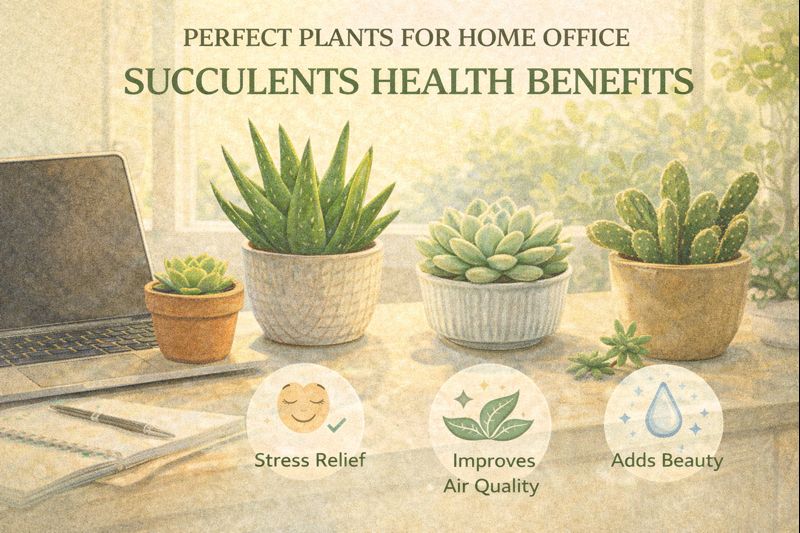
Why Succulents Are the Perfect Plants for a Home Office
“Nature does not hurry, yet everything is accomplished.”
And that’s exactly the energy you want in your home office.
Working from home has completely changed the way we design our living spaces. A desk is no longer just a desk — it’s your creative zone, your focus corner, sometimes even your calm place in a chaotic day. That’s where succulent plants come in. These indoor plants are more than just pretty décor pieces. They’re one of the best natural additions you can make to a home office, especially if you want beauty, balance, and real health benefits without adding extra work to your routine.
Succulents are a popular choice for people with a busy lifestyle or very little time. Why? Because they are resilient, adaptable, and require little attention. Unlike many house plants, succulents are designed by nature to store water, which means they don’t need frequent watering and can survive in dry environments. This makes them ideal for an office space, a study area, or even a small apartment where conditions aren’t always perfect.
But their appeal goes far beyond convenience. Succulents have a strong visual appeal thanks to their variety of shapes, vibrant colors, and clean lines. From rosette-shaped echeveria to compact aloe vera plants and jade plants, they bring a touch of natural beauty and minimalist beauty to any desk, shelf, or coffee table. Interior designers often use them as perfect additions to modern workspaces because they soften hard lines and add life without clutter.
Now let’s talk about air — because this is where succulents really shine. Like many indoor plants, succulents participate in the photosynthesis process, helping convert carbon dioxide into oxygen. Some varieties release oxygen at night, contributing to clean air and improved indoor air quality. While they’re not magic filters, their presence contributes to healthier indoor environments, especially when combined with other air-purifying qualities plants like snake plants.
Indoor air often contains volatile organic compounds released by household products, furniture, and electronics. Over time, poor air quality can contribute to sore throats, dry skin, and even skin irritations. Succulents help regulate humidity levels by releasing small amounts of water vapor, which is especially helpful during the winter months when indoor heating dries out the air.
Beyond physical health, succulents support mental health and mental well-being. Multiple studies show that the presence of plants in indoor spaces has a calming effect, helping lower stress levels, improve focus, and even support cognitive functions. Simply seeing greenery in your field of vision during work can reduce mental fatigue and create a more pleasant working rhythm.
💡 Practical tip:
If you have limited space, start with one small plant on your office desk. Even a single succulent can make a noticeable difference in mood and focus.
Whether you’re a green thumb, a seasoned gardener, or someone who has killed every plant they’ve owned (no judgment), succulents are a great way to bring life into your home office. They ask for very little and give back a lot — visually, mentally, and energetically.
In Part 2, we’ll dive deeper into the specific health benefits of succulents, including air purification, stress reduction, and why they’re considered natural allies for productivity and focus 🌱💻
Succulents Health Benefits: Cleaner Air, Lower Stress & Better Focus
“Plants give us oxygen for the lungs and for the soul.”
And in a home office, that matters more than you think.
When we talk about succulent plants, most people think “cute, small, easy.” True — but that’s only the surface. Behind their compact size and minimalist look, succulents offer real, science-backed health benefits, especially in indoor environments where we spend hours working, thinking, and staring at screens.
Succulents & Indoor Air Quality
Modern living spaces are filled with invisible pollutants. Household products, office furniture, printers, and even laptops release volatile organic compounds (VOCs) into the air. Over time, these compounds can contribute to headaches, fatigue, sore throats, and reduced concentration.
Like many indoor plants, succulents help improve indoor air quality by absorbing carbon dioxide and releasing oxygen during the photosynthesis process. Some varieties — including aloe and snake plants — are known for releasing oxygen at night, making them excellent companions for workspaces used long hours.
While succulents are not industrial air filters, they function as natural air purifiers, subtly improving clean air levels and supporting a healthier living environment when used consistently and in combination with other plants.
Humidity, Skin & Physical Comfort
One often-overlooked benefit of succulents is their role in regulating humidity levels. Through a process called transpiration, plants release water vapor into the air. This is especially beneficial during colder months when heating systems dry out indoor air.
Low humidity can lead to dry skin, irritated eyes, and even skin irritations — problems that many remote workers experience without realizing the cause. Succulents, which naturally store water, release it slowly, helping balance moisture in indoor spaces.
💡 Practical tip:
Place a few small succulents near your desk or monitor to counteract dry air from screens and heating.
Mental Health & Stress Reduction
The link between plants and mental health is well documented. Studies from institutions like Kansas State University and the University of Michigan show that the presence of indoor plants can lower stress levels, reduce anxiety, and even contribute to lower blood pressure.
Succulents are particularly effective because they’re visually soothing. Their symmetrical shapes, soft greens, and vibrant colors trigger a calming effect, helping the brain shift out of fight-or-flight mode. For people juggling a busy lifestyle, deadlines, and screen fatigue, this visual pause can be incredibly grounding.
Some studies involving hospital patients even suggest that exposure to plants may lead to less pain medication usage and faster recovery — highlighting the deep connection between greenery and healing.
Focus, Productivity & Cognitive Benefits
A cluttered or sterile workspace can quietly drain mental energy. Adding plants to an office space creates visual interest without distraction. Succulents, thanks to their compact size and low-maintenance nature, are ideal for boosting focus without demanding attention.
Research shows that people working in environments with plants demonstrate improved cognitive functions, better memory retention, and increased creativity. Succulents don’t just decorate your desk — they support the mental state needed for deep work.
Why Succulents Are a Smart Choice
- Require little water and minimal care requirements
- Thrive in limited space and various light conditions
- Improve air, humidity, and emotional comfort
- Offer numerous benefits without high effort
💡 Best way to start:
Choose one new plant you genuinely enjoy looking at. Emotional connection increases the positive impact.
In Part 3, we’ll explore the best types of succulents for a home office, including snake plants, jade plants, aloe vera, and how to choose the right one based on light, space, and your daily routine 🌱💼
Best Succulent Plants for a Home Office (Even If You Have Zero Time)
“The best rooms have something to say about the people who live in them.”
And a well-chosen plant says calm, focus, and intention.
Not all succulents are created equal — especially when it comes to indoor spaces and home offices. Some thrive in low light, some love bright sun, and others are almost impossible to kill (yes, we love those). Choosing the right succulent plants for your workspace means balancing aesthetics, care level, and real health benefits.
Snake Plants: The Office MVP
Let’s start with the undisputed champion of indoor plants: snake plants. Often recommended in NASA research on air purification, snake plants are known for absorbing carbon dioxide and reducing volatile organic compounds in the air. They’re also famous for releasing oxygen at night.
Snake plants are ideal if you:
- Have little time
- Forget to water
- Work long hours
- Want cleaner indoor air quality
Their upright structure makes them perfect for corners, shelves, or next to a desk without taking much room. They thrive with little attention and tolerate low light — a great idea for window-poor offices.
Aloe Vera: Functional & Healing
Aloe vera plants are another popular choice for a home office. Beyond their sleek look, aloe plants are known for their natural remedies properties. The gel inside the leaves can help soothe skin irritations, burns, and dry skin — which is surprisingly useful during long workdays.
Aloe prefers bright, indirect light and minimal watering. It’s an excellent choice if you want a plant that’s both decorative and functional.
Jade Plant: Calm Energy & Longevity
The jade plant is often associated with prosperity and balance. Its thick, glossy leaves store water, making it resilient and forgiving. Jade plants are great for desks or shelves and add a sense of stability to living spaces.
They’re especially loved by plant lovers who want a clean, structured look with minimal effort. With proper care, jade plants can live for decades — making them ideal long-term companions for your office space.
Echeveria & Small Succulent Varieties
If your desk is tiny or your style leans minimalist, rosette-shaped echeveria and other small plants are perfect. These succulent varieties offer incredible visual appeal, vibrant colors, and variety of shapes without overwhelming your workspace.
They’re best placed on an office desk, coffee table, or shelf near a window. While they need slightly more light than snake plants, they still fall under low maintenance options.
Choosing the Right Succulent for Your Space
Before buying a new plant, consider:
- Light exposure (direct, indirect, low light)
- Desk size or limited space
- How often you want to water (little water vs. frequent care)
- Your personal style (minimalist, cozy, modern)
💡 Practical tip:
If you’re unsure, start with one resilient plant. Once you feel confident, add more.
Why Succulents Work So Well in Offices
Succulents combine:
- Low-maintenance nature
- Compact size
- Strong aesthetic appeal
- Positive impact on mental well-being
They’re forgiving, adaptable, and visually calming — exactly what you want during intense workdays.
In Part 4, we’ll cover how to care for succulents properly, common mistakes to avoid (hello, excess water), and how to create a healthier, greener home office without stress 🌱✨
How to Care for Succulents: Simple Habits for a Healthier Home Office
“Almost all plants die from too much love.”
And succulents are the perfect example.
One of the biggest myths about succulent plants is that they need constant attention. In reality, the opposite is true. Succulents thrive when you give them space, light, and just the right amount of neglect. That’s exactly why they’re ideal indoor plants for a home office, especially if you have a busy lifestyle or little time.
The Golden Rule: Less Water, More Patience
Succulents evolved in dry environments, which means they are designed to store water in their leaves, stems, or roots. Overwatering is the number one reason succulents die — especially in indoor spaces.
A good rule of thumb:
- Water only when the soil is completely dry
- Use pots with drainage holes
- Avoid leaving excess water at the bottom
Too much water leads to root rot, mushy leaves, and eventually plant death. If you’re unsure, wait another few days. Succulents forgive underwatering — not overwatering.
💡 Best bet:
During the winter months, water even less. Growth slows down, and the plant needs minimal moisture.
Light: Bright but Not Aggressive
Most succulents love bright, indirect light. A window nearby is perfect, but harsh direct sunlight all day can cause sunburn — yes, plants get sunburn too.
If your office space lacks natural light:
- Choose snake plants or jade plants
- Rotate plants weekly for even exposure
- Avoid dark corners for light-loving varieties
Good light keeps succulents compact, colorful, and healthy. Poor light makes them stretch and lose their shape, reducing their visual appeal.
Pots, Soil & Placement Matter
Succulents need well-draining soil — not regular potting mix. A cactus or succulent soil blend allows roots to breathe and prevents excess moisture.
Small ceramic or clay pots are ideal for small plants on an office desk or coffee table. These materials absorb moisture and help regulate soil conditions.
Placement tips:
- Desk corners for calm energy
- Shelves for minimalist beauty
- Near screens to improve indoor air quality and humidity
Common Mistakes to Avoid
Even resilient plants have limits. Avoid these common errors:
- Watering on a schedule instead of checking soil
- Using decorative pots without drainage
- Keeping plants in low light permanently
- Assuming all succulents need the same care
Each type of succulent has slightly different needs, but their low-maintenance nature makes learning easy.
Long-Term Benefits of Consistent Care
With minimal effort, succulents offer:
- Better indoor air quality
- Improved mental well-being
- Reduced stress levels
- A calmer, more inspiring workspace
Their quiet presence supports focus, creativity, and emotional balance — which is exactly what a home office should provide.
💡 Next time you feel overwhelmed:
Pause. Look at your plant. Take a breath. It works more often than you think.
Mini-Survey: Succulents & Your Home Office 🌿
We’d love to know how plants fit into your daily work life.
✨ Your answers help us create better guides for healthier living spaces and smarter indoor plant choices. Sometimes, the smallest changes — like adding one plant — make the biggest difference.