The Truth About UV Light and Nail Polish Drying
“Not all nail polish dries the same way — and understanding the difference can save you time and frustration.”
One of the most common questions in the nail world today is: Can a UV lamp dry regular nail polish? With the rise of gel manicures and professional tools like UV nail lamps, many people assume that these devices can speed up the drying process for any type of polish.
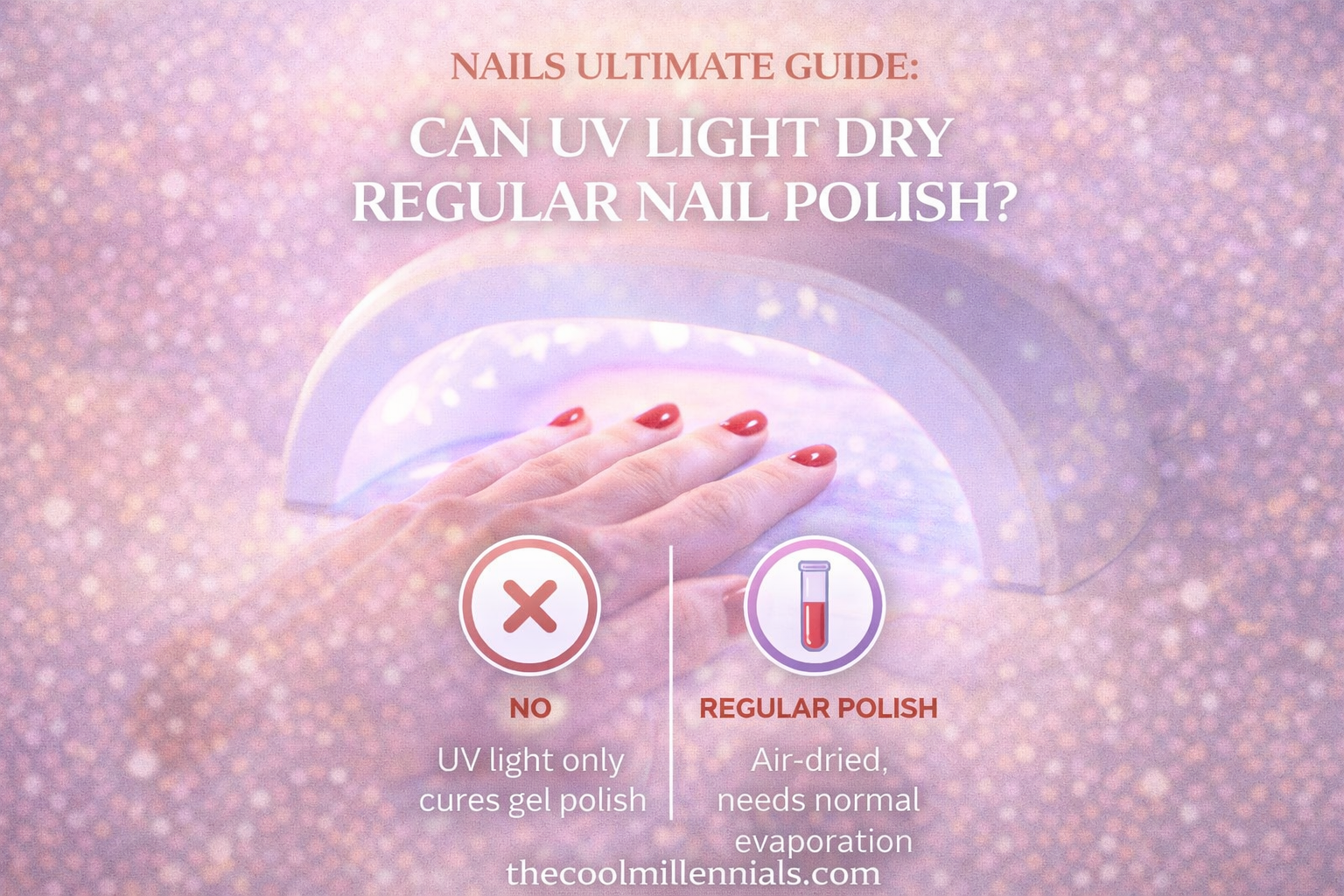
The short answer? No — UV light does not properly dry regular nail polish.
To understand why, we need to take a closer look at how different types of nail products work and what actually happens during the drying process.
Understanding the Two Types of Nail Polish
There are two main types of nail polish used in modern manicures:
1. Traditional Nail Polish
Also known as regular polish, this type dries through air drying. The liquid solvents in the polish slowly evaporate when exposed to air, leaving behind a solid layer of color.
This process does not require any special tools — just time.
2. Gel Polishes
Gel polishes, on the other hand, are completely different. They require a UV lamp or LED nail lamp to cure properly.
Instead of air drying, gel polish undergoes a chemical reaction triggered by ultraviolet light. This reaction hardens the polish into a durable, long-lasting layer.
This is why gel manicures are often found in nail salons and are known for their glossy, chip-resistant finish.
Why UV Light Doesn’t Work on Regular Polish
The key difference lies in the formula.
Traditional nail polish is not designed to react to UV light. It simply dries as the solvents evaporate. Even if you place your nails under a UV nail lamp, the polish will not cure faster because there is no chemical reaction happening.
In fact, using a UV lamp on regular polish may only slightly warm the surface, but it won’t significantly reduce drying time.
This is the fundamental difference between gel and traditional polish.
What Happens Under a UV Lamp?
When you place gel nails under a UV or LED lamp, the light activates special ingredients in the polish. These ingredients are sensitive to UV rays and begin a curing process that turns the liquid into a solid coating.
This process is called gel polish curing, and it creates a hard surface almost instantly.
Regular nail polish simply doesn’t contain these light-sensitive ingredients, which is why it cannot benefit from UV exposure.
Common Misconceptions
Many people believe that using a UV lamp will help them achieve faster drying for any type of polish. This misconception often comes from seeing how quickly gel polish dries under salon conditions.
However, it’s important to remember:
- UV lamps are designed specifically for gel polishes
- Regular polish requires air drying
- There is no shortcut using UV light for traditional polish
Using the wrong method can lead to smudging, uneven layers, or a manicure that doesn’t fully set.
Can UV Light Still Help at All?
While UV light does not cure regular polish, some people notice a slight improvement in drying speed due to heat exposure.
However, this effect is minimal and not reliable for achieving best results.
If your goal is faster drying, there are more effective alternatives such as:
- Applying thin layers
- Using a quick-dry top coat
- Trying drying sprays or fan dryers
A Quick Takeaway
If you’re using regular nail polish, your best option is still traditional air drying combined with proper techniques.
If you want instant drying and long-lasting results, switching to gel polish with a UV lamp is the better choice.
✅ In Part 2, we’ll take a deeper look at the difference between gel polish and regular polish, including how the curing process works and why UV lamps are essential tools for gel manicures. 💅
Gel Polish vs Regular Polish: The Key Differences
“The secret to perfect nails isn’t just the polish — it’s understanding how it works.”
To fully understand why a UV lamp cannot properly dry regular nail polish, it’s essential to compare gel polishes and traditional nail polish in greater detail.
Although both products may look similar when applied, they function very differently during the drying process. This difference explains why UV nail lamps are an essential tool for gel manicures but ineffective for regular polish.
How Regular Nail Polish Dries
Traditional nail polish, also known as regular polish, dries through a process called solvent evaporation.
When you apply a coat of polish, it contains liquid solvents that keep it smooth and spreadable. Once exposed to air, these solvents begin to evaporate, leaving behind a solid layer of color on the nail.
This process:
- Takes time (often 10–30 minutes or more)
- Depends on air exposure
- Requires patience and proper technique
- Works best with thin layers
Even when the surface feels dry, the layers underneath may still be soft. This is why regular polish is prone to smudging if not fully dried.
How Gel Polish Cures Under UV Light
Unlike regular polish, gel polish does not dry through evaporation. Instead, it requires a UV lamp or LED nail lamp to harden.
Gel polish contains special ingredients that react to ultraviolet light. When exposed to UV or LED light, a chemical reaction occurs, instantly transforming the liquid polish into a durable solid layer.
This process is called curing, not drying.
Key characteristics of gel polish curing:
- Requires a UV lamp or LED lamp
- Hardens within minutes
- Creates a hard surface
- Provides long-lasting results
- Produces a glossy, salon-quality finish
This is why UV gel manicures are so popular in nail salons.
UV Lamp vs LED Nail Lamp
There are two main types of lamps used in gel manicures:
UV Nail Lamps
These use UV bulbs to emit ultraviolet radiation that triggers the curing process. They are compatible with most gel polishes.
LED Nail Lamps
These use light-emitting diodes and cure gel polish faster. However, they only work with specific gel formulas designed for LED curing.
Both types are designed for gel polish curing, not for drying regular nail polish.
The Fundamental Difference
The fundamental difference between gel polish and regular polish lies in how they react to light.
- Regular polish → dries through air exposure
- Gel polish → cures through UV or LED light
This difference is why placing regular polish under a UV nail lamp will not produce the same effect as with gel polish.
Why Thin Layers Matter
Whether you’re using gel or regular polish, applying thin layers is crucial for achieving the best results.
For regular polish:
- Thin layers dry faster
- Reduce smudging
- Improve durability
For gel polish:
- Thin layers cure more evenly
- Prevent bubbling
- Ensure proper adhesion
Applying thick layers can slow down the drying process or interfere with proper curing.
Common Mistakes to Avoid
Many people make mistakes when trying to speed up nail drying. Here are some common ones:
- Using a UV lamp for regular polish (ineffective)
- Applying thick coats of polish
- Not allowing enough drying time
- Skipping base coats or top coats
Understanding the correct technique is key to achieving a perfect manicure.
Choosing the Right Type of Nail Polish
The best choice between gel and regular polish depends on your needs.
Choose regular nail polish if you:
- Prefer easy removal
- Like changing colors frequently
- Want a simple at-home manicure
Choose gel polish if you:
- Want long-lasting results
- Prefer a durable finish
- Don’t mind using a UV lamp
Each type has its advantages, and your choice should match your lifestyle and preferences.
Quick Takeaway
A UV lamp is specifically designed for curing gel polish through a chemical reaction. It does not accelerate the drying of traditional nail polish.
Understanding this difference helps you choose the right tools and avoid common mistakes.
✅ In Part 3, we’ll explore the best ways to dry regular nail polish faster without
Best Ways to Dry Nail Polish Faster Without UV Light
“Fast drying isn’t about shortcuts — it’s about using the right techniques.”
Since a UV lamp cannot properly dry regular nail polish, the next question is: what actually works to speed up the drying process?
Fortunately, there are several effective methods to reduce drying time and achieve a smooth, long-lasting manicure without relying on UV nail lamps.
With the right approach, you can avoid smudges, dents, and frustration — even when using traditional polish.
Apply Thin Layers for Faster Drying
One of the most important techniques for drying nail polish quickly is applying thin layers.
Thick coats may look appealing at first, but they dramatically slow down the drying process. The outer layer may feel dry while the inner layers remain soft, leading to smudging.
For best results:
- Apply 2–3 thin coats instead of one thick layer
- Allow each coat to partially dry before applying the next
- Build color gradually
This simple method is one of the most effective ways to improve both drying speed and overall finish.
Use a Quick-Dry Top Coat
A quick-dry top coat is one of the best tools for speeding up drying time.
Unlike regular top coats, these formulas are designed to:
- Seal the polish quickly
- Accelerate the drying process
- Create a smooth, protective top layer
A good quick-dry top coat can significantly reduce the time needed for your manicure to set while also improving durability.
Try Nail Drying Sprays or Drops
Another effective solution is using nail polish drying spray or quick-dry drops.
These products work by helping solvents evaporate faster, which speeds up the drying process.
Benefits include:
- Faster surface drying
- Reduced risk of smudging
- Easy application
They are widely available and easy to use, making them a popular choice for at-home manicures.
Use Cold Water to Set the Polish
A well-known trick for drying nails faster is using cold water.
After applying your polish and allowing it to set slightly, you can dip your nails into a bowl of cold water.
This method helps:
- Harden the outer layer
- Speed up the setting process
- Reduce smudging risk
However, it’s important to wait at least a few minutes before using this technique to avoid disrupting the polish.
Use a Fan Dryer Instead of UV
If you want to use a device, a fan dryer is a better option than a UV lamp for regular polish.
Fan dryers do not cure polish but help air circulate around the nails, which supports air drying.
This method:
- Speeds up evaporation
- Reduces drying time
- Is safe for all types of polish
Many nail salons use fan dryers as a finishing step for traditional manicures.
Avoid Common Drying Mistakes
To achieve the best results, it’s important to avoid mistakes that slow down the drying process.
Common errors include:
- Applying thick coats
- Not allowing time between layers
- Touching nails too soon
- Using low-quality products
Correct technique is key to achieving a perfect manicure.
Choosing the Best Drying Method
The best drying method depends on your preferences and available tools.
For most people, the most effective combination includes:
- Thin layers
- A quick-dry top coat
- Optional drying spray or fan
These methods provide faster drying without damaging the polish or affecting the final look.
Quick Takeaway
While UV light is essential for curing gel polishes, it does not help dry regular polish.
Instead, using proper techniques and the right products will give you better and more reliable results.
✅ In Part 4, we’ll cover safety concerns of UV exposure, risks vs benefits, and whether UV nail lamps are safe — plus a quick reader survey to boost engagement. 💅
UV Safety, Final Answer & Best Practices
“Knowing the right tools not only improves your manicure — it protects your health.”
After exploring how UV light, gel polishes, and regular nail polish work, we can now clearly answer the main question:
👉 Can a UV lamp dry regular nail polish?
No — UV light cannot properly dry regular nail polish.
While it may slightly warm the nail surface, it does not trigger the chemical reaction required to harden polish. Only gel polish is designed to cure under a UV lamp or LED nail lamp.
But beyond performance, it’s also important to understand the safety aspects of UV exposure when using nail lamps.
Are UV Nail Lamps Safe?
UV nail lamps are widely used in nail salons and at home for curing gel manicures. These devices emit ultraviolet radiation that activates the curing process.
For most people, occasional use is considered safe. However, repeated exposure to UV rays over time has raised some concerns.
Potential risks include:
- Skin aging on the hands
- Sensitivity to UV exposure
- Increased concern about risk of skin cancer (with long-term and frequent exposure)
While the level of exposure from nail lamps is relatively low, taking precautions is always a wise decision.
How to Reduce UV Exposure
If you regularly use UV nail lamps, there are simple ways to minimize exposure while still enjoying gel nails.
Here are some recommended precautions:
- Apply sunscreen to your hands before using the lamp
- Use fingerless UV-protective gloves
- Limit exposure time to only what is necessary
- Choose LED lamps, which often require shorter curing time
These steps can help reduce potential risks while maintaining long-lasting results.
UV vs LED Lamps: What’s the Difference?
Many people wonder whether LED nail lamps are safer than traditional UV lamps.
Both types emit light within the UV spectrum, but LED lamps typically:
- Cure polish faster
- Use lower exposure time
- Are more energy-efficient
Although both are effective for gel polish curing, neither type is useful for drying regular polish.
Best Practices for Nail Polish Application
Whether you choose gel or traditional polish, following best practices ensures better results and healthier nails.
For regular nail polish:
- Apply thin layers
- Allow proper air drying
- Use a quick-dry top coat
- Avoid rushing the drying process
For gel polish:
- Use a compatible UV lamp or LED lamp
- Cure each layer properly
- Follow recommended timing
- Avoid overexposure
Choosing the correct method based on the type of nail polish is essential for achieving a flawless manicure.
Final Takeaway
Understanding the difference between gel polish and traditional nail polish is key.
- Regular polish → dries through air
- Gel polish → cures under UV or LED light
Trying to use a UV lamp on regular polish is ineffective and can lead to frustration.
Instead, using proper drying techniques will give you the best results and a long-lasting finish.
Quick Reader Survey 💅
Have you ever used a UV nail lamp?