Understanding Skin Changes in Your 30s and 40s
“Your 30s and 40s are not about reversing age — they’re about preserving your skin’s strength and glow.”
As you enter your 30s and 40s, your skin begins to go through noticeable changes. While these changes are completely natural, understanding them is the first step to choosing the best anti-aging treatments and maintaining a youthful appearance.
This stage is often when the first signs of aging become visible, including fine lines, uneven skin tone, and early dark spots caused by sun exposure.
The good news? With the right approach, you can significantly slow down these changes and maintain healthy, radiant skin.
What Happens to Your Skin in Your 30s?
Your 30s are often when subtle changes begin to appear.
These include:
- The appearance of fine lines, especially around the eyes (crow’s feet)
- Slight loss of skin elasticity
- Slower collagen production
- Early signs of sun damage
Collagen is essential for firm, smooth skin. As its production decreases, the skin may start to lose its plumpness.
At the same time, repeated facial expressions can lead to the formation of expression lines.
Skin Changes in Your 40s
In your 40s, these changes become more noticeable due to:
- Continued decline in collagen
- Increased volume loss
- More visible age spots and dark spots
- Uneven skin tone
Hormonal changes can also impact the skin, leading to dryness or increased sensitivity depending on your skin type.
This is often when people begin to explore more targeted treatment options.
The Impact of Sun Exposure
One of the biggest contributors to skin aging is sun exposure.
UV rays accelerate the breakdown of collagen and lead to:
- Sun spots
- Wrinkles
- Loss of elasticity
- Increased risk of long-term damage
This is why sun protection is one of the most important steps in any anti-aging routine.
Daily use of sunscreen helps prevent further damage and protects your skin’s health.
The Role of Free Radicals
Environmental factors like pollution and UV exposure generate free radicals, which damage skin cells.
This process, known as oxidative stress, accelerates aging and contributes to:
- Wrinkles
- Uneven skin tone
- Loss of brightness
Using skincare products rich in antioxidants, such as vitamin C, can help combat these effects.
Building a Strong Skincare Foundation
Before considering advanced treatments, it’s essential to build a consistent skincare routine.
Key elements include:
- Gentle cleansing
- Hydration with ingredients like hyaluronic acid
- Protection with sunscreen
- Use of targeted active ingredients
A strong routine supports the skin’s natural function and enhances the effectiveness of future treatments.
Why Early Intervention Matters
The earlier you start addressing signs of aging, the better your long-term results.
This doesn’t mean aggressive treatments — it means:
- Preventing damage
- Supporting skin health
- Maintaining balance
Small, consistent efforts can lead to long-lasting results.
Quick Takeaway
Your 30s and 40s are the perfect time to invest in your skin.
By understanding skin changes, protecting against sun exposure, and supporting collagen production, you can maintain a healthy and youthful glow.
✅ In Part 2, we’ll explore the best anti-aging skincare products and ingredients, including vitamin C, hyaluronic acid, and chemical exfoliants for optimal results. ✨
The Most Effective Anti-Aging Ingredients
“The right ingredients can transform your skin — consistency is the real secret.”
Once you understand how your skin changes in your 30s and 40s, the next step is choosing the right skincare products.
Not all products are created equal. The effectiveness of your routine depends on the active ingredients you use and how well they target your specific concerns — from fine lines to dark spots and loss of firmness.
Vitamin C: Brightening and Protection
Vitamin C is one of the most powerful ingredients in any anti-aging routine.
It works by:
- Neutralizing free radicals
- Brightening uneven skin tone
- Reducing dark spots and sun spots
- Supporting collagen production
Regular use of vitamin C helps improve skin radiance and protects against sun exposure damage.
It’s especially effective when applied in the morning before sunscreen.
Hyaluronic Acid: Deep Hydration
Hyaluronic acid is essential for maintaining hydrated and plump skin.
It can hold large amounts of water, helping to:
- Reduce the appearance of fine lines
- Improve skin texture
- Support the skin barrier
- Enhance overall skin health
Hydrated skin looks smoother and more youthful, making this ingredient a key part of any routine.
Chemical Exfoliants for Skin Renewal
As skin ages, the natural shedding of dead skin cells slows down.
Chemical exfoliants help speed up this process and improve skin cell turnover.
Common options include:
- Lactic acid (gentle, hydrating)
- Beta hydroxy acids (BHA) for deeper pore cleansing
- Other mild acids for resurfacing the top layer of the skin
Benefits include:
- Smoother texture
- Brighter complexion
- Reduced appearance of acne scars
- Improved absorption of skincare products
Targeting Fine Lines and Wrinkles
To reduce fine lines, it’s important to focus on ingredients that support skin structure.
Key benefits of anti-aging products include:
- Boosting collagen production
- Improving elasticity
- Reducing expression lines like crow’s feet and frown lines
Consistent use of the right products leads to visible improvement over time.
Treating Dark Spots and Uneven Skin Tone
Hyperpigmentation, including age spots and dark spots, becomes more common with age.
To address these concerns, look for products that:
- Brighten the skin
- Even out tone
- Reduce discoloration
Combining exfoliation with antioxidants like vitamin C can provide the best results.
Eye Care for Delicate Areas
The skin around the eyes is thinner and more prone to aging.
Using a targeted eye cream can help reduce:
- Dark circles
- Fine lines
- Puffiness
Regular care of this area supports a more refreshed and youthful appearance.
Building an Effective Routine
An effective anti-aging routine doesn’t need to be complicated.
A simple structure includes:
Morning:
- Cleanser
- Vitamin C serum
- Moisturizer
- Sunscreen
Evening:
- Cleanser
- Chemical exfoliant (a few times per week)
- Hydrating serum (like hyaluronic acid)
- Moisturizer
Consistency is more important than complexity.
Choosing Products for Your Skin Type
Different skin types require different approaches.
- Dry skin → Focus on hydration
- Oily skin → Use lightweight, balancing products
- Sensitive skin → Choose gentle formulations
- Combination skin → Balance hydration and oil control
Selecting the right products ensures better results and fewer irritations.
Quick Takeaway
Using the right active ingredients — like vitamin C, hyaluronic acid, and chemical exfoliants — is essential for maintaining youthful, healthy skin.
Consistency and simplicity are the keys to success.
✅ In Part 3, we’ll explore the most effective professional treatments, including chemical peels, laser treatments, and dermal fillers for advanced anti-aging results. ✨
Professional Treatments for Visible Results
“Sometimes, the best results come from combining skincare with professional treatments.”
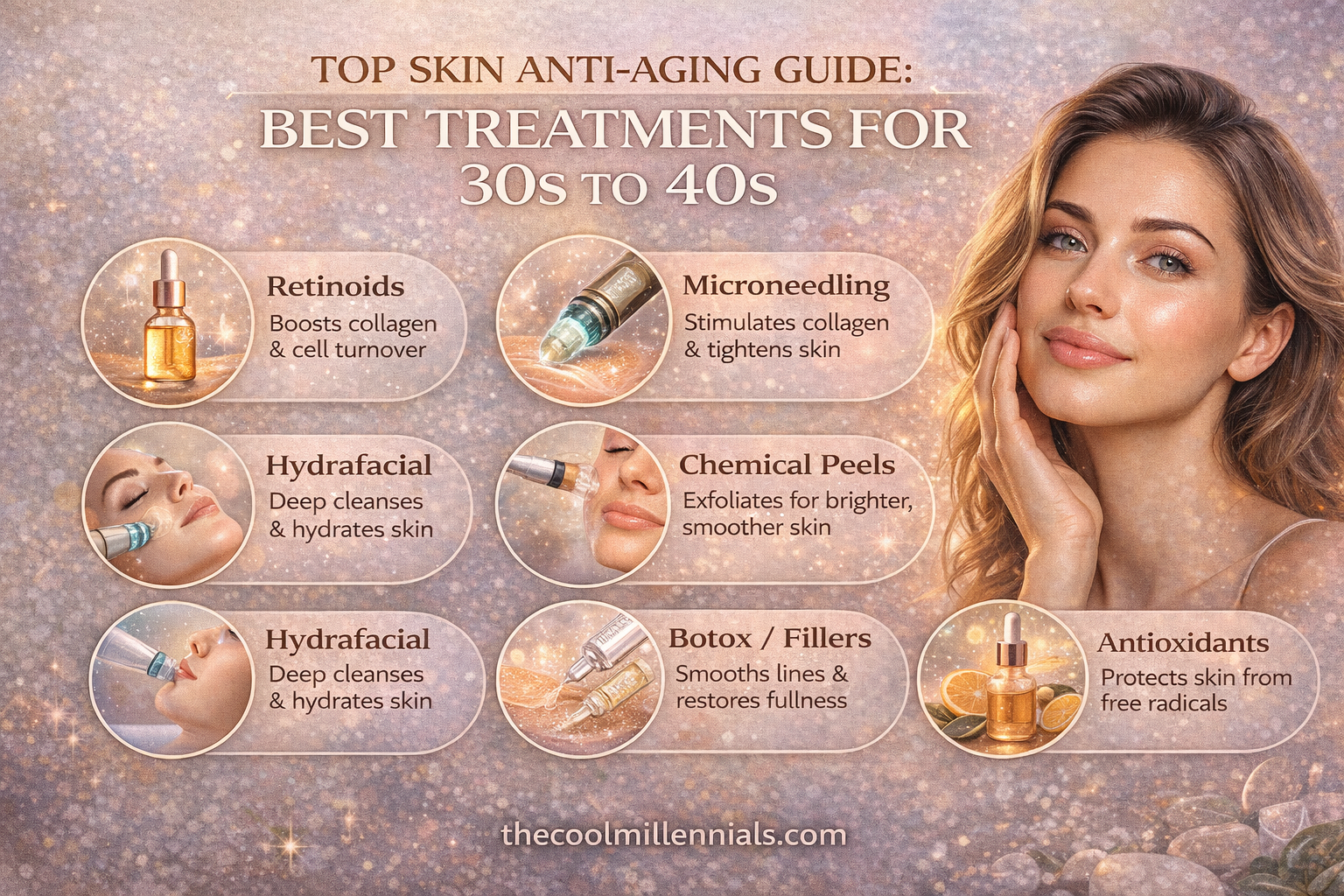
While a consistent skincare routine is essential, many people in their 30s and 40s turn to professional anti-aging treatments for more visible and faster results.
These treatments are designed to target deeper skin concerns such as fine lines, dark spots, acne scars, and volume loss — going beyond what topical products can achieve.
Chemical Peels for Skin Renewal
Chemical peels are one of the most popular and effective treatments for improving skin texture and tone.
They work by removing the top layer of the skin, allowing new, healthier skin to emerge.
Benefits include:
- Reduction of fine lines
- Improvement in uneven skin tone
- Fading of dark spots and sun spots
- Smoother, brighter skin
There are different types of peels, from gentle to more intensive, depending on your skin type and goals.
For beginners, gentle peels with ingredients like lactic acid are often recommended.
Laser Treatments and Skin Resurfacing
Laser treatments are advanced procedures that target deeper layers of the skin.
They help stimulate collagen production and improve overall skin quality.
Common benefits:
- Reduction of wrinkles
- Improvement of acne scars
- Tightening of the skin
- More even skin tone
Laser resurfacing is particularly effective for addressing long-term sun damage and deeper wrinkles.
However, these treatments may require some recovery time, depending on their intensity.
Microneedling and Collagen Boosting
Microneedling is a minimally invasive treatment that uses tiny needles to create micro-injuries in the skin.
This process stimulates the body’s natural healing response and boosts collagen production.
Benefits include:
- Smoother skin texture
- Reduction of fine lines
- Improvement in skin firmness
- Enhanced absorption of skincare products
Advanced versions like RF microneedling combine radiofrequency energy for even stronger results.
Dermal Fillers for Volume Loss
As we age, volume loss becomes more noticeable, especially in areas like the cheeks and under the eyes.
Dermal fillers are used to restore volume and create a more youthful appearance.
They can help:
- Smooth deeper wrinkles
- Enhance facial contours
- Reduce the appearance of dark circles
- Provide immediate, natural-looking results
This is a non-surgical option with relatively quick results and minimal downtime.
Choosing the Right Treatment Plan
The best treatment plan depends on several factors:
- Your skin type
- Your specific concerns
- Your medical history
- Your desired results
A personalized consultation with a professional is essential to determine the most effective approach.
Often, combining treatments (for example, microneedling + skincare) provides the best outcomes.
Balancing Treatments and Skincare
Professional treatments work best when combined with a solid skincare routine.
After treatments, it’s important to:
- Use gentle products
- Maintain hydration
- Apply daily sun protection
- Avoid harsh ingredients during recovery
This helps maximize results and protect your skin.
Are These Treatments Right for You?
Not everyone needs professional treatments — and that’s okay.
They are best suited for:
- More visible signs of aging
- Targeted concerns like acne scars or deep wrinkles
- Those looking for faster or more dramatic results
For others, a strong skincare routine may be enough.
Quick Takeaway
Professional treatments like chemical peels, laser treatments, microneedling, and dermal fillers can significantly improve skin quality and reduce signs of aging.
When combined with good skincare habits, they offer powerful, long-lasting results.
✅ In Part 4, we’ll build the ultimate anti-aging routine, share lifestyle tips (sleep, nutrition, sun protection), and include an engaging reader survey for your article. ✨
Daily Routine, Lifestyle & Long-Term Results
“The best anti-aging treatment isn’t just a product — it’s a lifestyle.”
After exploring skincare ingredients and professional treatments, the final step is creating a sustainable routine that supports long-term skin health.
True anti-aging results come from a combination of consistency, smart habits, and protecting your skin from daily damage.
The Ultimate Anti-Aging Routine
A simple, consistent routine is more effective than an overly complex one.
Morning Routine ☀️
Start your day by protecting your skin:
- Gentle cleanser
- Antioxidant serum (like vitamin C)
- Hydrating product (such as hyaluronic acid)
- Moisturizer
- Broad-spectrum sunscreen
👉 Sun protection is the most important step to prevent sun exposure damage, dark spots, and premature aging.
Evening Routine 🌙
Nighttime is when your skin repairs itself:
- Cleanser to remove impurities
- Targeted treatments (like chemical exfoliants a few times per week)
- Hydrating serum
- Nourishing moisturizer
- Optional eye cream for dark circles and fine lines
Consistency in your evening routine supports skin cell turnover and recovery.
The Power of Sun Protection
If you do only one thing for anti-aging, make it sunscreen.
Daily SPF helps:
- Prevent sun spots and age spots
- Protect collagen
- Reduce the risk of long-term damage
- Maintain a more youthful appearance
Even on cloudy days, UV rays can impact your skin.
Lifestyle Habits That Affect Your Skin
Your daily habits play a major role in how your skin ages.
1. Hydration 💧
Drinking enough water supports:
- Skin elasticity
- Healthy glow
- Overall skin’s health
2. Nutrition 🥗
A balanced diet rich in antioxidants helps fight free radicals.
Focus on:
- Fruits and vegetables
- Healthy fats
- Nutrient-rich foods
3. Sleep 😴
During sleep, your body repairs skin damage.
Poor sleep can lead to:
- Dull skin
- Increased fine lines
- Dark circles
4. Stress Management 🧘♀️
Chronic stress contributes to aging and oxidative stress.
Practices like relaxation, mindfulness, or movement can improve both mental well-being and skin appearance.
Consistency Over Perfection
The most important factor in anti-aging is consistency.
You don’t need every product or treatment — you need:
- A routine you can maintain
- Products suited to your skin type
- Healthy daily habits
Small efforts over time lead to long-lasting results.
When to Consider Professional Treatments
If you’re not seeing the results you want, combining your routine with professional treatment options can help.
These may include:
- Chemical peels
- Laser treatments
- Dermal fillers
A personalized approach ensures better outcomes.
Final Takeaway
Anti-aging in your 30s and 40s is about prevention, protection, and consistency.
By combining:
- The right skincare routine
- Effective ingredients
- Healthy lifestyle habits
You can maintain glowing, healthy, and resilient skin for years to come.