What “Hypoallergenic” Really Means
For many dog lovers, finding a large dog that doesn’t shed excessively feels almost impossible.
The good news?
There are several large dog breeds known for:
- Low-shedding coats
- Fewer allergens
- Reduced pet dander
- More allergy-friendly grooming needs
These are often called hypoallergenic dog breeds.
However, there’s one important thing to understand first:
👉 No dog is truly 100% hypoallergenic.
What Does “Hypoallergenic Dog” Actually Mean?
A hypoallergenic dog is simply a breed that tends to produce:
- Less dander
- Less loose hair
- Fewer allergy-triggering particles
This may help reduce:
- Allergic reactions
- Sneezing
- Itchy eyes
- Pet allergy symptoms
for some allergy sufferers.
But every person reacts differently.
The Real Cause of Dog Allergies
Many people think dog hair itself causes allergies.
Actually, most allergies come from:
- Dander (dead skin cells)
- Saliva proteins
- Urine proteins
Hair simply spreads allergens around the environment.
That’s why low-shedding dogs can sometimes be easier for allergy sufferers to tolerate.
Why Some Dogs Shed Less
Low-shedding dogs usually have:
- Curly coats
- Hair-like coats
- Wiry coats
- Single coats instead of double coats
These coat types trap loose hair rather than releasing it everywhere.
However, this often means:
👉 More grooming is required.
Large Dogs vs Small Hypoallergenic Dogs
Many people assume hypoallergenic breeds are always tiny dogs.
But there are actually several excellent large hypoallergenic dogs that combine:
- Big-dog personality
- Lower shedding
- Family-friendly temperaments
These breeds are especially popular with active families who want:
- A larger companion
- Less fur around the house
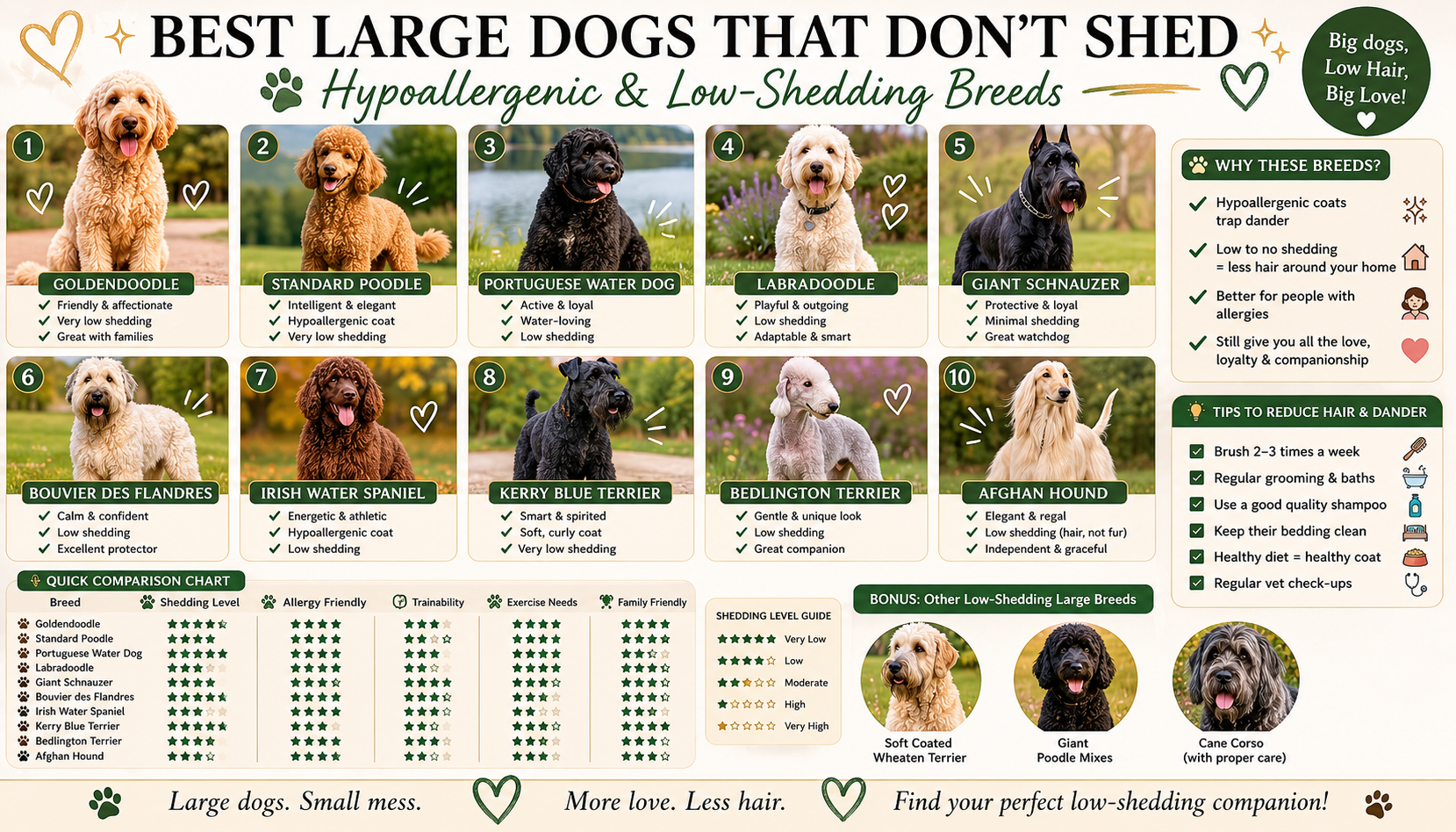
The Most Popular Large Hypoallergenic Dog Breeds
Some of the best-known options include:
- Standard Poodle
- Portuguese Water Dog
- Giant Schnauzer
- Irish Water Spaniel
- Airedale Terrier
Each breed has different:
- Energy levels
- Grooming needs
- Temperaments
- Exercise requirements
The Standard Poodle: One of the Best Options
The Standard Poodle is one of the most recommended large hypoallergenic breeds.
Why?
Because it has:
- A curly low-shedding coat
- High intelligence
- Athletic ability
- Strong trainability
However:
- Regular grooming is essential
- Frequent brushing helps prevent matting
Portuguese Water Dogs
Portuguese Water Dog became especially famous for being:
- Energetic
- Family-friendly
- Low shedding
Their curly waterproof coat traps loose hair effectively.
They thrive in:
- Active households
- Homes with regular exercise
- Families who enjoy outdoor activities
Giant Schnauzers
Giant Schnauzer are large, powerful dogs with:
- Wiry low-shedding coats
- Protective instincts
- High intelligence
They require:
- Consistent training
- Mental stimulation
- Frequent grooming
They are not ideal for very sedentary owners.
Grooming Matters More Than Breed Alone
Even low-shedding dogs still require maintenance.
Most hypoallergenic breeds need:
- Weekly brushing
- Professional grooming
- Coat trimming
- Ear cleaning
Without grooming, trapped hair and dander can build up quickly.
Double Coat vs Single Coat
Dogs with heavy double coats tend to shed more.
Examples include:
- German Shepherd
- Golden Retriever
These breeds are usually not considered hypoallergenic because they release large amounts of fur and dander.
Lifestyle Matters Too
The “best” hypoallergenic dog depends on:
- Your living space
- Activity level
- Grooming budget
- Allergy severity
A highly energetic dog may become difficult in small apartments without enough exercise.
Quick Takeaway
Large hypoallergenic dog breeds do exist — but no dog is completely allergen-free.
The best low-shedding breeds typically have:
- Curly or wiry coats
- Lower dander spread
- Regular grooming needs
Popular options include:
- Standard Poodles
- Portuguese Water Dogs
- Giant Schnauzers
✅ In Part 2, we’ll compare the best large hypoallergenic breeds in detail, including personality, grooming needs, exercise levels, and family compatibility.
Best Large Hypoallergenic Breeds Compared
Not all large hypoallergenic dogs are the same.
Some are calm and family-oriented.
Others are highly energetic working dogs that need constant stimulation.
Choosing the right breed is not only about shedding levels — it’s also about:
- Personality
- Energy level
- Grooming needs
- Lifestyle compatibility
A dog that’s perfect for an active family may be overwhelming for someone living in a small apartment.
Let’s compare some of the best large low-shedding dog breeds in more detail.
Standard Poodle
Standard Poodle is often considered one of the best all-around hypoallergenic large dogs.
Personality
Standard Poodles are:
- Extremely intelligent
- Loyal
- Trainable
- Social
They usually bond closely with their families and learn commands quickly.
Coat Type
Their curly coat traps loose hair, reducing shedding around the home.
However:
- Daily or frequent brushing is ideal
- Professional grooming is often needed every few weeks
Without maintenance, the coat can mat easily.
Best For
- Families
- First-time dog owners
- Active households
- Allergy sufferers wanting versatility
Portuguese Water Dog
Portuguese Water Dog is one of the most popular large hypoallergenic breeds.
Personality
They are:
- Energetic
- Affectionate
- Athletic
- Friendly
These dogs love activity and human interaction.
Exercise Needs
Portuguese Water Dogs require:
- Daily exercise
- Mental stimulation
- Outdoor activity
Without enough activity, they may become destructive or restless.
Coat Characteristics
Their curly waterproof coat sheds very little but needs:
- Regular brushing
- Grooming maintenance
- Trimming
Giant Schnauzer
Giant Schnauzer is a powerful working breed with a low-shedding wiry coat.
Personality
Giant Schnauzers are:
- Protective
- Intelligent
- Confident
- Highly energetic
They often form very strong bonds with their owners.
Important Consideration
This breed needs:
- Consistent training
- Leadership
- Heavy exercise
They are not ideal for inexperienced dog owners.
Grooming
Their wiry coat requires:
- Frequent brushing
- Professional grooming
- Regular coat maintenance
Irish Water Spaniel
Irish Water Spaniel is one of the rarest hypoallergenic large breeds.
Personality
These dogs are:
- Playful
- Intelligent
- Curious
- Energetic
They enjoy active lifestyles and outdoor adventures.
Coat
Their dense curly coat:
- Minimizes shedding
- Requires regular grooming
- Helps reduce loose fur spread
Airedale Terrier
Airedale Terrier is often called the “King of Terriers.”
Personality
Airedales are:
- Independent
- Smart
- Loyal
- Energetic
They tend to have strong personalities and enjoy mental stimulation.
Coat
Their wiry coat sheds minimally but requires:
- Weekly brushing
- Occasional hand stripping or grooming
Bouvier des Flandres
Bouvier des Flandres is another excellent low-shedding large breed.
Personality
They are:
- Calm
- Protective
- Family-oriented
- Loyal companions
Grooming Needs
Their thick coat requires:
- Frequent brushing
- Professional maintenance
- Careful grooming routines
Energy Levels Matter
One major mistake people make is focusing only on shedding.
Many large hypoallergenic breeds are:
- Working dogs
- High-energy dogs
- Mentally demanding breeds
Without enough exercise, boredom can lead to:
- Barking
- Destructive behavior
- Anxiety
Best Large Hypoallergenic Dogs by Lifestyle
| Lifestyle | Best Breed |
|---|---|
| Active families | Portuguese Water Dog |
| Elegant all-rounder | Standard Poodle |
| Protective working dog | Giant Schnauzer |
| Outdoor adventure | Irish Water Spaniel |
| Strong personality | Airedale Terrier |
Apartment vs House Living
Some large hypoallergenic breeds adapt better to apartments than others.
Better for apartments:
- Standard Poodles (with enough exercise)
Better with larger space:
- Giant Schnauzers
- Portuguese Water Dogs
Energy level matters more than size alone.
Quick Takeaway
The best large hypoallergenic dog depends on:
- Your activity level
- Grooming commitment
- Experience with dogs
- Living environment
Low shedding does not mean low maintenance.
Most hypoallergenic breeds still require:
- Regular grooming
- Frequent brushing
- Consistent exercise
✅ In Part 3, we’ll explore grooming routines, allergy management, shedding myths, and how to reduce allergens in your home with large dogs.
Grooming, Allergy Management & Shedding Myths
One of the biggest misconceptions about hypoallergenic dogs is the idea that they require less maintenance.
In reality, many low-shedding breeds actually require more grooming than heavy-shedding dogs.
Why?
Because instead of loose hair falling onto your furniture and floors, much of the hair stays trapped inside the coat.
That means regular grooming becomes essential for:
- Coat health
- Skin health
- Reducing allergens
- Preventing painful matting
The Biggest Myth: “Hypoallergenic Means No Allergies”
This is one of the most common misunderstandings.
There is technically:
👉 No completely allergy-free dog.
Even low-shedding breeds still produce:
- Dander
- Saliva proteins
- Skin oils
However, some breeds spread fewer allergens into the environment because they shed less fur.
This can make life easier for some allergy sufferers.
Why Low-Shedding Dogs Still Need Grooming
Dogs with:
- Curly coats
- Wiry coats
- Hair-like coats
often trap:
- Loose fur
- Dander
- Dirt
inside the coat itself.
Without grooming, this buildup can:
- Increase allergens
- Create odor
- Cause skin irritation
- Lead to painful mats
Brushing Routines Matter
Most large hypoallergenic dogs need:
- Weekly brushing minimum
- Sometimes daily brushing
depending on coat type.
Curly Coats
Breeds like:
- Standard Poodle
- Portuguese Water Dog
require frequent brushing because curls trap hair easily.
Wiry Coats
Breeds like:
- Giant Schnauzer
- Airedale Terrier
need brushing plus coat maintenance such as trimming or hand stripping.
Professional Grooming Costs
Many people underestimate grooming expenses.
Large hypoallergenic breeds often require:
- Professional grooming every 4–8 weeks
- Coat trimming
- Nail care
- Ear cleaning
This can become a significant long-term cost.
Why Dander Matters More Than Hair
Pet allergies are usually triggered more by:
- Dead skin cells
- Saliva proteins
- Environmental buildup
than by fur itself.
Hair simply carries allergens around the home.
That’s why reducing loose hair can sometimes reduce allergy symptoms.
How to Reduce Allergens at Home
Even with hypoallergenic breeds, home maintenance matters.
Helpful strategies include:
- Vacuuming frequently
- Using HEPA air purifiers
- Washing dog bedding regularly
- Grooming outdoors when possible
- Keeping furniture clean
Bathing Frequency
Bathing can help reduce allergens, but overbathing may irritate the skin.
Most low-shedding dogs benefit from:
- Regular but moderate bathing
- Gentle dog shampoos
- Consistent coat maintenance
A healthy coat often reduces dander buildup naturally.
Shedding vs Maintenance
Ironically:
👉 Dogs that shed less often require more grooming work.
For example:
Heavy Shedding Dogs
- Fur everywhere
- Less brushing structure needed
Low-Shedding Dogs
- Less loose fur
- More grooming maintenance
This trade-off surprises many first-time owners.
Exercise Also Affects Coat Health
Healthy dogs generally maintain healthier skin and coats.
Most large hypoallergenic breeds require:
- Daily exercise
- Mental stimulation
- Outdoor activity
Poor health or stress can sometimes worsen:
- Skin issues
- Dander production
- Coat condition
Allergy Testing Before Adoption
If someone in your household has severe allergies, experts often recommend:
- Spending time with the breed first
- Visiting breeders or foster homes
- Testing reactions before adoption
Because reactions vary from person to person.
One “hypoallergenic” breed may work better than another depending on the individual.
Best Hypoallergenic Coat Types
Generally, the most allergy-friendly coats are:
- Curly coats
- Hair-like coats
- Short single coats
- Hairless breeds
Dogs with heavy double coats usually spread more allergens through seasonal shedding.
What About Doodles?
Many people assume doodle mixes are automatically hypoallergenic.
But coat genetics are unpredictable.
Some doodles inherit:
- Low-shedding curly coats
while others inherit:
- Heavy-shedding coats from retriever breeds
There is no guarantee.
Quick Takeaway
Large hypoallergenic dogs still require:
- Frequent grooming
- Coat maintenance
- Allergy management at home
Low shedding does not mean low effort.
The key is balancing:
- Grooming commitment
- Exercise needs
- Allergy sensitivity
- Lifestyle compatibility
✅ In Part 4, we’ll cover the best large hypoallergenic dogs for families, apartments, active lifestyles, and first-time owners — plus a fun reader survey for your article.
Best Breeds by Lifestyle, Families & Final Tips
Choosing the best large hypoallergenic dog is about much more than shedding alone.
The perfect breed depends on:
- Your lifestyle
- Activity level
- Living space
- Grooming commitment
- Personality preferences
A dog that thrives in an active outdoor family may struggle in a quiet apartment environment — and vice versa.
The goal is finding a breed that matches both your allergy needs and your daily life.
Best Large Hypoallergenic Dogs for Families
Some large low-shedding breeds are especially good with children and family life.
Standard Poodle
Standard Poodle is often one of the best family-friendly options.
Why families love them:
- Highly intelligent
- Easy to train
- Affectionate
- Playful but adaptable
They tend to fit well into many lifestyles and are often excellent with children.
Portuguese Water Dog
Portuguese Water Dog is another great family choice.
Best for:
- Active families
- Outdoor lifestyles
- Homes with regular exercise
They are affectionate and energetic, making them excellent companions for active households.
Best Large Hypoallergenic Dogs for Apartments
Large dogs in apartments can absolutely work — if the breed’s energy level is manageable.
Better Apartment-Friendly Options
Standard Poodle
Can adapt well with:
- Daily walks
- Mental stimulation
- Structured routines
More Challenging Apartment Breeds
Some large hypoallergenic breeds may struggle in smaller spaces if under-exercised, including:
- Giant Schnauzers
- Very high-energy working breeds
Lack of stimulation can lead to:
- Barking
- Destructive behavior
- Anxiety
Best Hypoallergenic Dogs for Active People
If you enjoy:
- Hiking
- Running
- Outdoor adventures
certain breeds may fit perfectly.
Top Active Breeds
Portuguese Water Dog
Athletic and energetic.
Irish Water Spaniel
Irish Water Spaniel loves outdoor activity and stimulation.
Giant Schnauzer
Excellent for experienced active owners who enjoy training and structure.
Best Hypoallergenic Dogs for Calm Households
Some people want a quieter companion instead of a highly athletic dog.
Bouvier des Flandres
Bouvier des Flandres tends to be:
- Calm
- Loyal
- Protective
- More relaxed indoors
They still require exercise, but their temperament is often steadier and calmer.
Best Breeds for First-Time Dog Owners
Not every large hypoallergenic breed is beginner-friendly.
Easier for Beginners
Standard Poodle
Often considered one of the best first-time owner breeds because of:
- Intelligence
- Adaptability
- Trainability
More Difficult for Beginners
Giant Schnauzer
Requires:
- Leadership
- Consistent training
- Strong exercise routine
Without structure, they may become difficult to manage.
Grooming Commitment Checklist
Before choosing a low-shedding dog, ask yourself:
✔ Can I afford professional grooming?
✔ Am I willing to brush regularly?
✔ Do I have time for coat maintenance?
Because many hypoallergenic breeds require:
- Frequent brushing
- Trimming
- Coat care
Energy Level Checklist
Also consider:
✔ How active am I?
✔ Can I provide daily exercise?
✔ Do I enjoy training and mental stimulation?
Large intelligent breeds often become unhappy without enough activity.
Hypoallergenic Doesn’t Mean Maintenance-Free
This is the most important takeaway.
Low-shedding dogs usually require:
- More grooming
- More coat care
- More maintenance overall
The trade-off is:
👉 Less fur around the house and potentially fewer allergens.
Final Advice Before Choosing a Breed
Before adopting:
- Spend time with the breed first
- Research grooming costs
- Understand exercise needs
- Be realistic about your lifestyle
A beautiful dog that doesn’t fit your daily routine may become stressful for both owner and pet.
Final Takeaway
The best large hypoallergenic dog breeds combine:
- Lower shedding
- Great companionship
- Family compatibility
- Trainability
Popular favorites include:
- Standard Poodles
- Portuguese Water Dogs
- Giant Schnauzers
- Irish Water Spaniels
The right dog is not just the one that sheds the least — it’s the one that fits your life best.