Why Metal Choice Matters for Sensitive Ears
“If your ears react to earrings, the problem isn’t you — it’s the metal.”
If you’ve ever experienced itching, redness, or discomfort after wearing earrings, you’re not alone. Allergic reactions to certain metals are very common, especially for people with sensitive skin or sensitive ears.
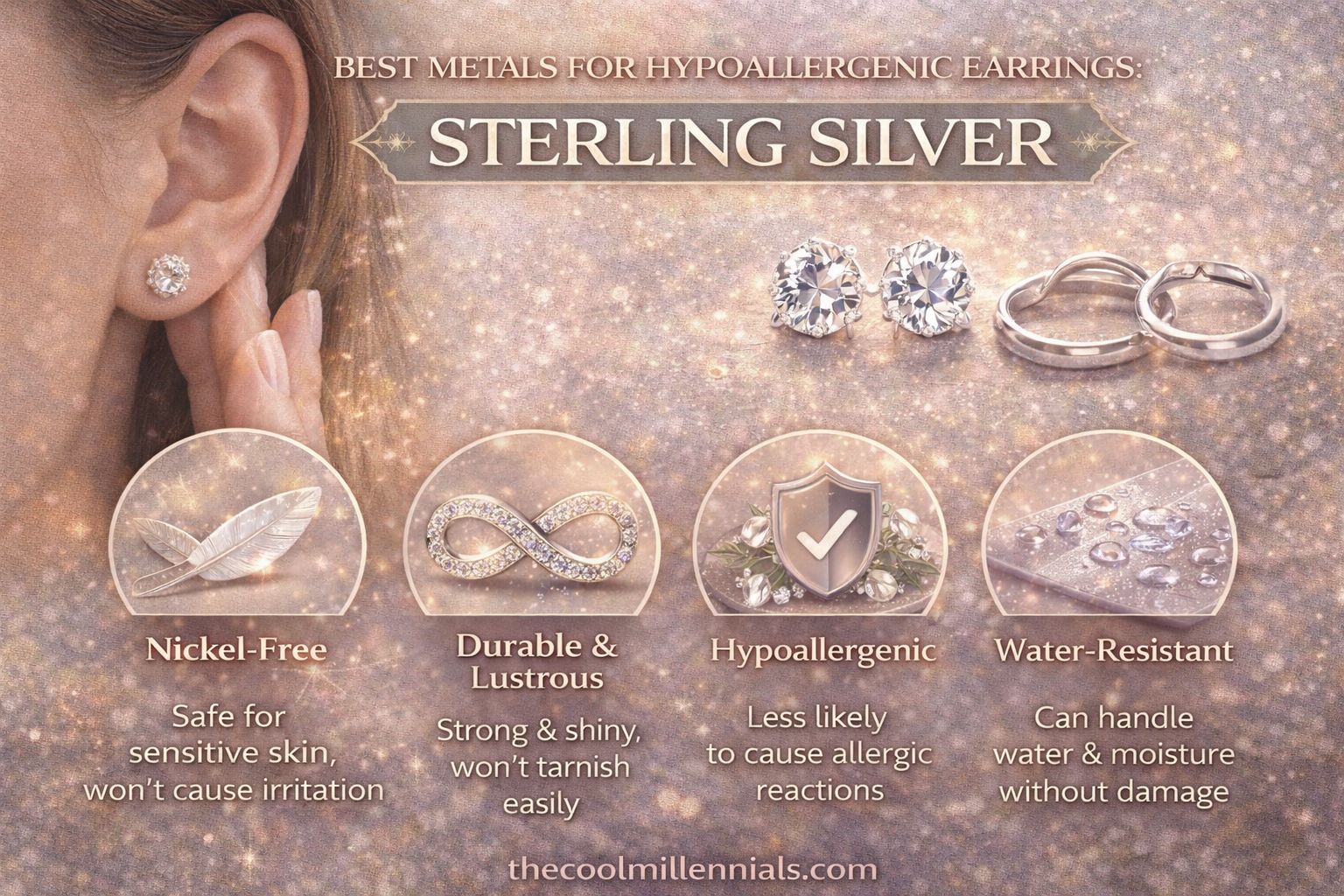
Choosing the right material is essential — and that’s where sterling silver comes in as one of the most popular hypoallergenic metals.
What Causes Earring Allergies?
Most metal allergies are caused by exposure to certain base metals — especially nickel.
When low-quality jewelry contains these metals, it can trigger:
- Skin irritation
- Redness and itching
- Swelling
- Even contact dermatitis in severe cases
This reaction happens because the body identifies certain metals as harmful, leading to inflammation.
Why Hypoallergenic Metals Matter
Hypoallergenic earrings are designed to minimize the risk of reactions.
They are made from materials that are:
- Less likely to trigger allergies
- Safe for long-term wear
- Suitable for daily use
Choosing hypoallergenic jewelry is especially important if you wear earrings frequently or have had previous reactions.
What Is Sterling Silver?
Sterling silver is a precious metal widely used in jewelry.
It is made of:
- 92.5% pure silver
- 7.5% other metals (usually copper for strength)
This composition makes it durable while maintaining the beauty of silver.
You may often see it labeled as “925 silver,” which indicates its high silver content.
Is Sterling Silver Hypoallergenic?
The short answer: Yes — but with conditions.
High-quality sterling silver jewelry is generally safe for most people with sensitive ears.
However, there are a few important factors:
1. Nickel Content
Some lower-quality sterling silver may contain small amounts of nickel, which can trigger reactions.
👉 Always choose nickel-free sterling silver for the best results.
2. Quality Matters
Not all silver jewelry is the same.
High-quality or genuine sterling silver from a reputable source is much less likely to cause irritation than cheaper alternatives.
3. Skin Sensitivity Levels
While sterling silver works for most people, those with severe allergies may still react to trace metals.
In those cases, other options (like titanium) may be better.
Why Sterling Silver Is a Popular Choice
Despite these considerations, sterling silver remains one of the best choices for hypoallergenic earrings.
Key benefits:
- Affordable compared to gold
- Elegant and timeless look
- Suitable for everyday wear
- Compatible with most skin types
It offers a perfect balance between beauty, durability, and comfort.
Sterling Silver vs Other Metals
Compared to other materials:
- Base metal jewelry → High risk of irritation
- Gold (especially pure gold) → Very safe but more expensive
- Surgical stainless steel → Durable and hypoallergenic
Sterling silver stands out as a great option for those who want quality without the high price of gold.
Quick Takeaway
If you have sensitive ears, switching to sterling silver earrings can significantly reduce skin irritation and allergic reactions.
Just make sure to choose high-quality, nickel-free jewelry for the best experience.
✅ In Part 2, we’ll compare sterling silver with other hypoallergenic metals like gold, titanium, and surgical steel to help you choose the best option. ✨
Sterling Silver vs Gold, Titanium & Surgical Steel
“Not all metals are created equal — especially when it comes to sensitive ears.”
While sterling silver is a popular hypoallergenic choice, it’s not the only option available. If you have sensitive skin or experience frequent allergic reactions, understanding how different metals compare can help you choose the safest and most comfortable earrings.
Let’s break down the most common hypoallergenic metals and how they perform.
Sterling Silver – The Balanced Choice
As we’ve seen, sterling silver jewelry offers a great balance between affordability and comfort.
Pros:
- Widely available
- Elegant and versatile
- Generally safe for sensitive ears
- More affordable than gold
Cons:
- May contain trace metals
- Lower-quality versions can cause skin irritation
👉 Best for: everyday wear with nickel-free sterling silver
Gold – The Classic Hypoallergenic Metal
Gold has long been considered the gold standard in hypoallergenic jewelry — but purity matters.
Types of gold:
- Pure gold (24k) → Highly hypoallergenic but too soft for daily jewelry
- 18k or 14k gold → Durable and still safe for most people
- White gold → May contain nickel unless specified as nickel-free
Pros:
- Low risk of metal allergies
- Luxurious and long-lasting
- Suitable for very sensitive skin
Cons:
- More expensive
- Lower-karat gold may include alloys that trigger reactions
👉 Best for: people with strong sensitivities who want a premium option
Titanium – The Medical-Grade Option
Medical grade titanium is one of the safest metals available.
It’s often used in:
- Medical implants
- Body piercings
- High-quality hypoallergenic earrings
Pros:
- Extremely low risk of allergic reactions
- Lightweight and durable
- Completely nickel-free
Cons:
- Limited design options
- Less traditional jewelry appearance
👉 Best for: severe metal allergies or newly pierced ears
Surgical Stainless Steel – Durable and Affordable
Surgical stainless steel is another popular option for sensitive ears.
Pros:
- Strong and long-lasting
- Resistant to tarnishing
- Often used in professional piercings
Cons:
- May contain trace amounts of nickel
- Not ideal for extremely sensitive individuals
👉 Best for: durability and budget-friendly hypoallergenic options
What About Other Metals?
Some other materials you may encounter:
- Rose gold → Contains copper, may trigger reactions
- Plated jewelry → Thin coating can wear off, exposing base metals
- Base metals → High risk of skin reaction
👉 These are generally not recommended for sensitive ears.
How to Choose the Right Metal
Your ideal choice depends on your level of sensitivity:
Mild Sensitivity
- Sterling silver
- Surgical steel
Moderate Sensitivity
- High-quality gold
- Nickel-free sterling silver
Severe Allergies
- Titanium
- Medical-grade materials
Tips to Avoid Allergic Reactions
To reduce the risk of irritation:
- Choose nickel-free jewelry
- Buy from a reputable source
- Avoid cheap plated earrings
- Clean earrings regularly
- Store them in an airtight container
These small steps can make a big difference.
Quick Takeaway
While sterling silver is a great all-around option, metals like gold and titanium may be better for highly sensitive ears.
The key is understanding your skin and choosing high-quality materials.
✅ In Part 3, we’ll explore how to identify real sterling silver, avoid fake jewelry, and choose high-quality earrings that won’t cause irritation. ✨
How to Identify Real Sterling Silver & Avoid Fake Jewelry
“When it comes to sensitive ears, quality isn’t optional — it’s essential.”
Choosing sterling silver earrings is a great step toward avoiding allergic reactions, but not all silver jewelry is truly what it claims to be.
Low-quality or fake products can still contain harmful base metals, leading to skin irritation and discomfort — even if labeled as “silver.”
Here’s how to identify genuine sterling silver and make sure you’re buying safe, high-quality hypoallergenic jewelry.
What Is Real Sterling Silver?
Authentic sterling silver contains:
- 92.5% pure silver
- 7.5% alloy metals (usually copper)
This balance provides durability while maintaining hypoallergenic properties.
👉 The key indicator of authenticity is the silver content, often marked directly on the jewelry.
Look for the “925” Stamp
The easiest way to identify real sterling silver is by checking for a “925” stamp.
This mark means:
- The piece contains 92.5% silver
- It meets international quality standards
You may also see markings like:
- “Sterling”
- “Ster”
- “925”
👉 If there is no marking, the piece may not be genuine.
Beware of Silver-Plated Jewelry
One of the most common issues is confusing sterling silver with silver-plated jewelry.
Key difference:
- Sterling silver → Solid metal
- Plated jewelry → Thin layer of silver over a base metal
Plated jewelry can wear off over time, exposing metals that may cause:
- Skin reactions
- Allergies
- Discoloration
👉 For sensitive ears, always avoid plated earrings.
Simple Tests to Check Authenticity
If you’re unsure about your jewelry, here are a few simple checks:
1. Magnet Test
Silver is not magnetic.
- If your earrings stick to a magnet → likely not real silver
2. Tarnish Test
Real silver may tarnish slightly over time.
- This is normal and can be cleaned
- Fake metals often do not tarnish naturally
3. Weight and Feel
Genuine silver usually feels:
- Slightly heavier
- Solid and well-made
Cheap jewelry often feels light and hollow.
Choose a Reputable Source
One of the best ways to avoid fake jewelry is to buy from trusted sellers.
Look for:
- Verified brands
- Clear material descriptions
- Customer reviews
- Certifications when available
Avoid extremely cheap products claiming to be “pure silver.”
Why Quality Matters for Sensitive Ears
Even small amounts of unwanted metals can trigger:
- Nickel allergy
- Skin irritation
- Long-term sensitivity issues
High-quality nickel-free sterling silver significantly reduces these risks.
Proper Care for Sterling Silver Earrings
Taking care of your earrings helps maintain their quality and reduces irritation.
Tips:
- Clean regularly with a soft cloth
- Store in an airtight container
- Avoid exposure to moisture and chemicals
- Remove before swimming or showering
Good maintenance keeps your jewelry safe and long-lasting.
Common Mistakes to Avoid
Many people unknowingly increase their risk of irritation by:
- Buying cheap jewelry
- Wearing earrings continuously without cleaning
- Ignoring early signs of skin reaction
- Choosing style over material quality
Being mindful of these factors can protect your skin.
Quick Takeaway
To avoid allergic reactions, always choose genuine sterling silver, check for the 925 stamp, and avoid plated or low-quality jewelry.
Quality makes all the difference when it comes to comfort and safety.
✅ In Part 4, we’ll share the best earrings styles for sensitive ears, daily care tips, and include a quick reader survey for your article. ✨
Best Styles, Daily Care & Final Tips
“The right earrings should feel as good as they look.”
Now that you know how to choose high-quality sterling silver and other hypoallergenic metals, the final step is selecting the right earring styles and maintaining them properly.
Even with the best materials, design and care play a major role in preventing skin irritation and ensuring long-term comfort.
Best Earring Styles for Sensitive Ears
Not all earrings are equally comfortable. Some styles are better suited for sensitive ears because they reduce friction and pressure.
1. Stud Earrings – The Safest Choice
Stud earrings are often the best option for sensitive ears.
Why they work:
- Minimal movement
- Less friction on the skin
- Lightweight and comfortable
- Ideal for everyday wear
👉 Choose nickel-free sterling silver studs for maximum comfort.
2. Small Hoops – Stylish and Comfortable
Small hoops offer a balance between style and comfort.
Benefits:
- Lightweight designs
- Less pulling on the earlobe
- Secure fit
Avoid large or heavy hoops, as they can irritate the skin over time.
3. Lightweight Drop Earrings
If you prefer a more elegant look, opt for lightweight drop earrings.
Tips:
- Choose minimal designs
- Avoid heavy materials
- Ensure smooth earring posts
This reduces strain and prevents discomfort.
4. Avoid Heavy or Cheap Earrings
Certain styles increase the risk of irritation:
- Heavy earrings → cause pulling and inflammation
- Cheap plated jewelry → exposes base metals
- Rough or poorly finished posts → irritate the skin
👉 Always prioritize quality over appearance.
Daily Care Tips for Hypoallergenic Earrings
Even the best hypoallergenic jewelry needs proper care to remain safe and comfortable.
Clean Your Earrings Regularly
Bacteria and buildup can cause irritation.
- Clean with a soft cloth
- Use mild soap and water if needed
- Dry thoroughly before wearing
Keep Your Ears Clean
Maintaining good hygiene helps prevent reactions.
- Clean earlobes daily
- Avoid wearing earrings in irritated skin
- Let your ears rest occasionally
Store Properly
Storage affects the quality of your jewelry.
- Keep earrings in an airtight container
- Avoid humidity
- Store separately to prevent scratches
Remove Earrings When Needed
Take off your earrings:
- Before swimming
- During intense workouts
- When sleeping (if uncomfortable)
This helps prevent skin reactions and extends the life of your jewelry.
Signs You Should Change Your Earrings
Pay attention to your body. Signs of a reaction include:
- Redness
- Itching
- Swelling
- Burning sensation
If this happens, switch to safer options like:
- High-quality sterling silver
- Titanium
- Pure gold
Final Takeaway
Choosing the right hypoallergenic earrings isn’t just about the metal — it’s also about the design and how you care for them.
With the right combination, you can enjoy beautiful earrings without discomfort.