Which One Hurts More & Why?
“Everyone asks the same question: does microblading hurt more than a tattoo?”
If you’re considering microblading or a traditional tattoo, understanding the pain levels is one of the most important factors before booking your appointment.
The short answer?
👉 They feel different — and not always in the way you expect.
What Is Microblading?
Microblading is a form of permanent makeup used to create natural-looking eyebrows.
It involves:
- A manual tool with tiny needles
- Creating individual hair-like strokes
- Depositing pigment into the upper layers of the skin
👉 The goal: mimic natural eyebrow hair for a soft, natural look.
What Is a Traditional Tattoo?
A traditional tattooing process uses:
- An electric tattoo machine
- Rapid needle movement
- Ink deposited into the deeper layers of the skin
This applies to:
- Body tattoos
- Traditional eyebrow tattoos (older techniques)
👉 The result is more permanent and often bolder.
Key Difference That Affects Pain
The biggest factor in pain is how deep the needle goes.
Microblading:
- Targets the outermost layer of the skin
- Uses a manual, controlled technique
- Slower, more precise strokes
👉 Feels like light scratching.
Tattoo:
- Penetrates deeper into the skin
- Uses a fast, vibrating machine
- Continuous needle motion
👉 Feels more intense and consistent.
So… Which One Hurts More?
👉 Most people report that traditional tattoos hurt more than microblading.
Why?
- Deeper penetration
- Faster needle movement
- Longer exposure in one area
However…
👉 Microblading happens on the eyebrow area, which is a sensitive zone.
So while it’s technically less invasive, it can still feel uncomfortable.
What Does Microblading Pain Feel Like?
Common descriptions:
- Scratching sensation
- Light stinging
- Mild discomfort
Many say:
👉 It’s more annoying than painful.
What Does Tattoo Pain Feel Like?
Common descriptions:
- Burning sensation
- Sharp or vibrating pain
- Continuous intensity
Pain varies depending on:
- Body area
- Pain tolerance
- Session length
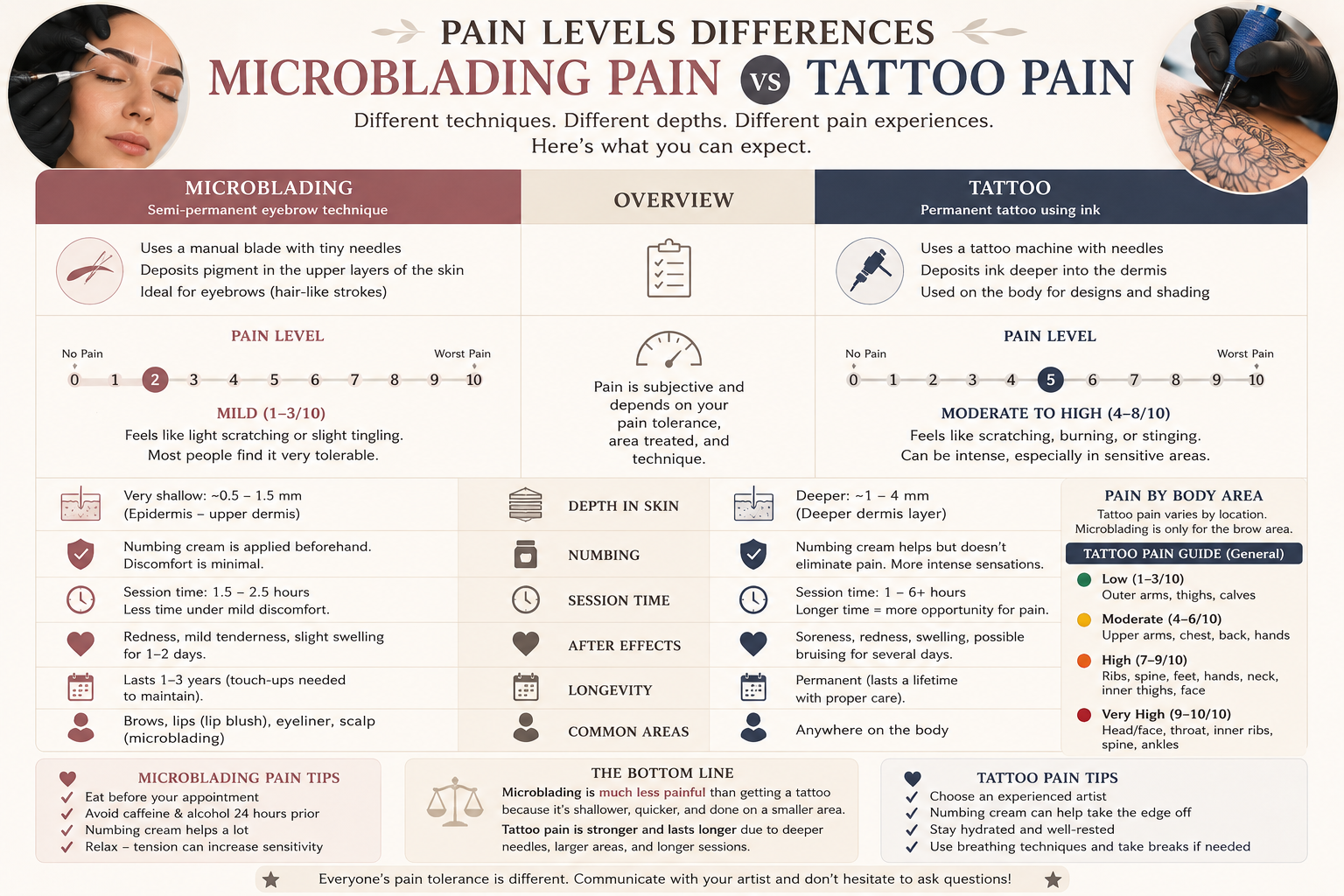
Pain Levels Comparison
| Factor | Microblading | Tattoo |
|---|---|---|
| Depth | Surface | Deeper |
| Tool | Manual | Machine |
| Sensation | Scratching | Burning / vibrating |
| Pain level | Mild to moderate | Moderate to high |
The Role of Numbing Cream
Good news 👇
Both procedures often use:
- Topical numbing cream
- Topical anesthetic
This significantly reduces discomfort during the procedure.
👉 Many clients feel little to no pain after numbing.
Important Factors That Affect Pain
Pain is not the same for everyone.
It depends on:
- Your pain threshold
- Skin sensitivity
- The artist’s experience
- Your stress level
👉 A skilled artist can make a huge difference.
Quick Takeaway
- Microblading = surface-level, lighter pain
- Tattoo = deeper, more intense pain
👉 Most people find microblading easier to tolerate.
✅ In Part 2, we’ll compare pain by area, skin type (like oily skin), and how long the discomfort lasts after each procedure.
Skin Type, Sensitive Areas & Healing Pain
“Pain doesn’t stop when the procedure ends — healing matters too.”
While the actual procedure is important, many people forget to ask another key question:
👉 How painful is the healing process afterward?
Pain and discomfort can vary depending on:
- The treatment area
- Your skin type
- Healing sensitivity
- Aftercare routine
Why the Eyebrow Area Feels Sensitive
The eyebrow area is naturally delicate because:
- Skin is thinner
- The area is close to bone structure
- There are many nerve endings nearby
Even though microblading only reaches the upper layers of the skin, this location can make sensations feel stronger.
Does Microblading Hurt During Healing?
Most people experience:
- Mild tenderness
- Tightness
- Slight itching
👉 Usually for a few days after the procedure.
Some also notice:
- Flaking
- Dryness
- Temporary sensitivity
The discomfort is generally considered mild.
Tattoo Healing Pain
Traditional tattoos often involve more healing discomfort because the pigment reaches the deeper layers of the skin.
Common sensations include:
- Soreness
- Burning feeling
- Tight skin
- Peeling
👉 Larger tattoos or heavily shaded areas may feel uncomfortable longer.
Healing Time Comparison
Microblading Healing:
- Initial healing: 7–14 days
- Full settling: several weeks
Tattoo Healing:
- Surface healing: 2–3 weeks
- Full healing: longer depending on size
Skin Type Matters More Than People Think
Your skin type can strongly affect:
- Pain perception
- Healing
- Final results
Oily Skin
People with oily skin may experience:
- Faster fading
- More touch-ups
- Slightly different healing
👉 Microblading can sometimes blur more on oily skin.
Sensitive Skin
Sensitive skin may react with:
- Redness
- Irritation
- Increased tenderness
This applies to both tattoos and microblading.
Dry Skin
Dry skin often holds pigment better and may heal more predictably.
Sensitive Areas: Tattoos vs Brows
Some tattoo locations hurt significantly more than others.
Most painful tattoo areas:
- Ribs
- Hands
- Feet
- Spine
Compared to these areas, microblading is usually considered much easier.
Pain Duration: Which Lasts Longer?
Microblading:
- Short discomfort period
- Mild healing sensations
Tattoo:
- Longer soreness
- More irritation during healing
👉 Especially for large or detailed tattoos.
How to Reduce Discomfort
Before your appointment:
- Stay hydrated
- Avoid alcohol
- Sleep well
Afterward:
- Follow aftercare instructions carefully
- Avoid direct sunlight
- Keep the area clean
👉 Proper aftercare reduces unnecessary discomfort.
Emotional Stress Can Increase Pain
Anxiety can amplify pain perception.
Many first-time clients are surprised to discover:
👉 The anticipation feels worse than the actual procedure.
Quick Comparison
| Factor | Microblading | Tattoo |
|---|---|---|
| Healing discomfort | Mild | Moderate |
| Healing time | Shorter | Longer |
| Sensitive area | Eyebrows | Depends on body area |
| Pain duration | Short | Longer-lasting |
Quick Takeaway
- Microblading usually causes less healing discomfort
- Tattoos tend to feel more intense both during and after the procedure
👉 Your skin type and sensitivity play a major role.
✅ In Part 3, we’ll compare microblading tools vs tattoo machines, pain intensity levels, and why the techniques feel so different.
Tools, Needle Depth & Why the Pain Feels Different
“It’s not just the pain level that changes — it’s the type of pain.”
One reason microblading and traditional tattooing feel so different is because the techniques themselves are completely different.
From the tools used to the depth of the pigment, every detail affects the sensation.
Microblading Uses a Manual Technique
Microblading is performed with a small handheld tool rather than a machine.
This tool contains:
- Multiple tiny needles
- Arranged in a blade-like shape
The artist manually creates:
- Fine cuts
- Individual hair strokes
- Natural-looking brows
👉 The movement is slower and more controlled.
Traditional Tattoos Use a Machine
A traditional tattoo uses an electric tattoo machine.
The machine rapidly moves needles up and down to:
- Deposit pigment deeply
- Create bold lines or shading
- Produce permanent designs
👉 This creates constant vibration and repeated skin penetration.
Why Tattoo Pain Feels Stronger
The main reason:
👉 Tattoos reach the deeper layers of the skin.
Microblading:
- Pigment stays near the surface
- Reaches the upper dermis
Tattoo:
- Ink is deposited much deeper
- Continuous needle penetration
Deeper penetration = stronger pain.
Pain Sensation Comparison
Microblading Sensation
People often describe it as:
- Scratching
- Tiny cuts
- Mild stinging
Because the procedure is slower, some clients find it easier to tolerate mentally.
Tattoo Sensation
Tattoo pain is often described as:
- Burning
- Vibrating
- Repetitive stinging
The machine’s constant movement can make the sensation more intense over time.
Pain Intensity Levels
Typical Pain Scale (subjective)
| Procedure | Average Pain Level |
|---|---|
| Microblading | 3–5/10 |
| Tattoo | 5–8/10 |
👉 This depends heavily on pain tolerance and the area treated.
The Eyebrow Area Changes the Experience
Although microblading is less invasive, the eyebrow area is still sensitive.
Why?
- Thin skin
- Proximity to bone structure
- Facial nerves
👉 Some people find facial procedures emotionally more uncomfortable than body tattoos.
Technique Affects the Outcome
Microblading Technique
Designed for:
- Natural brows
- Hair-like appearance
- Soft, realistic results
Perfect for:
- Sparse brows
- Eyebrow hair loss
- Natural enhancement
Traditional Eyebrow Tattoos
Older tattoo techniques often create:
- Solid appearance
- Less natural brows
- Stronger pigment saturation
👉 Modern microblading is preferred for a softer look.
Artist Skill Makes a Huge Difference
A skilled artist can reduce:
- Unnecessary discomfort
- Excessive skin trauma
- Poor healing results
The artist’s experience affects:
- Pressure
- Technique
- Precision
👉 Choosing the right professional matters more than many people realize.
Does the Procedure Get Worse Over Time?
Microblading:
- Usually manageable throughout
- Session lengths are shorter
Tattoo:
- Longer sessions increase discomfort
- Repeated needle passes can intensify pain
👉 Fatigue can make tattoos feel more painful over time.
Quick Takeaway
- Microblading uses a manual, surface-level technique
- Tattoos use deeper, machine-driven penetration
👉 That’s why tattoo pain usually feels stronger and more intense.
✅ In Part 4, we’ll cover which procedure is easier to tolerate, long-term maintenance, touch-ups, and include a fun reader survey for your blog.
Which Is Easier to Tolerate? Final Verdict & Maintenance
“Pain is temporary — but choosing the right procedure matters long after the appointment.”
Now that we’ve compared techniques, healing, and pain sensations, let’s answer the biggest question:
👉 Which is actually easier to tolerate: microblading or a traditional tattoo?
For most people, the answer is clear — but there are still important differences to consider.
Final Verdict: Which Hurts More?
Most people report:
👉 Traditional tattoos hurt more than microblading.
Why?
- Tattoos penetrate deeper into the skin
- The machine creates constant vibration
- Sessions are often longer
- Some body areas are extremely sensitive
Microblading usually feels:
- More superficial
- More controlled
- Shorter in duration
Many clients describe it as:
👉 Mild discomfort rather than true pain.
Which Procedure Is Easier to Handle Mentally?
Interestingly, emotional stress changes the experience.
Microblading Anxiety
Because the procedure happens on the face and near the eyes, some people feel nervous even if the actual pain is low.
Tattoo Anxiety
Tattoo fear is often related to:
- Needle depth
- Session length
- Permanent commitment
👉 Mental anticipation can increase pain perception.
Pain vs Beauty Results
The reason many people choose microblading is the final result:
- Natural-looking brow shape
- Realistic hair strokes
- Soft enhancement
Modern microblading creates brows that mimic real eyebrow hairs, unlike older traditional eyebrow tattoos.
Maintenance Differences
Pain isn’t the only long-term factor.
Microblading Maintenance
Microblading is considered:
- Semi-permanent
- Requires regular touch-ups
- Pigment fades over time
Touch-ups are usually needed every:
- 1–3 years depending on skin type and lifestyle
Tattoo Maintenance
Traditional tattoos:
- Last much longer
- Fade more slowly
- Need fewer touch-ups
👉 But removal is much harder if you change your mind.
Skin Type & Longevity
Oily Skin
On oily skin, microblading may:
- Fade faster
- Blur slightly over time
Dry or Normal Skin
Usually holds pigment better and maintains cleaner strokes longer.
Which Procedure Should You Choose?
Choose Microblading If You Want:
- Natural brows
- Softer appearance
- Less pain
- Semi-permanent flexibility
Choose Traditional Tattoo If You Want:
- Long-lasting results
- Bold appearance
- Permanent pigment retention
Pro Tips Before Booking
Before either procedure:
✔ Research the artist carefully
✔ Read reviews
✔ Ask about numbing options
✔ Follow aftercare instructions
👉 A skilled artist reduces both pain and healing issues.
Quick Comparison
| Factor | Microblading | Traditional Tattoo |
|---|---|---|
| Pain level | Lower | Higher |
| Healing discomfort | Mild | Moderate |
| Look | Natural | Bold |
| Longevity | Semi-permanent | Permanent |
| Touch-ups | More frequent | Less frequent |
Final Takeaway
- Microblading is generally less painful and more natural-looking
- Traditional tattoos are deeper, more intense, and longer-lasting
👉 The best option depends on your pain tolerance, style preference, and long-term goals.